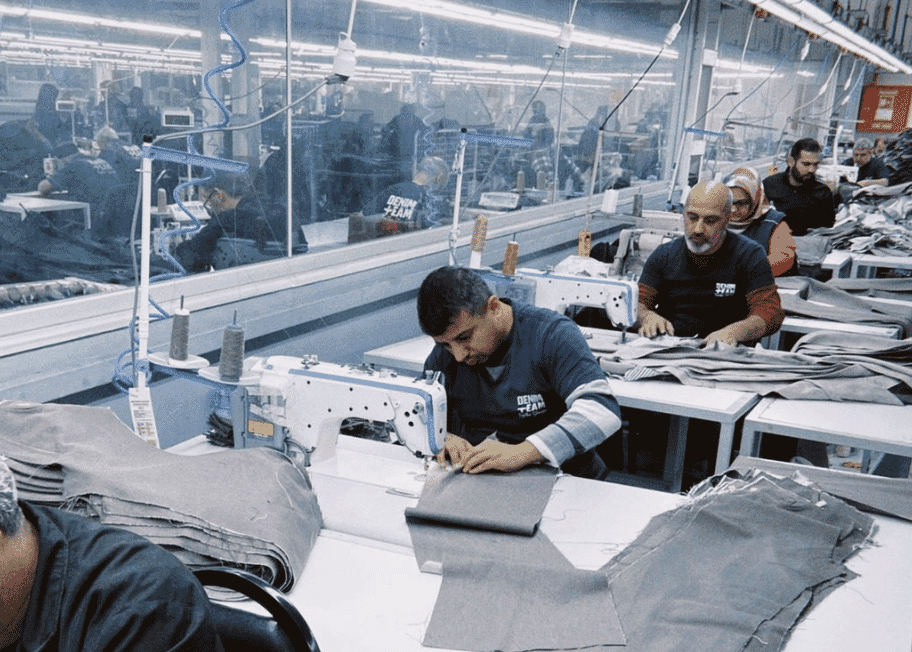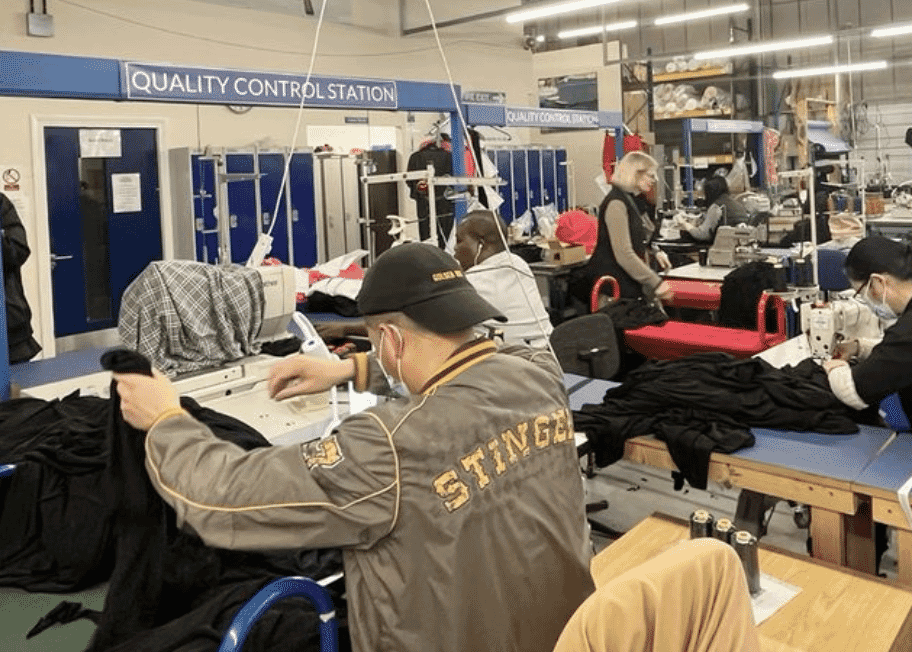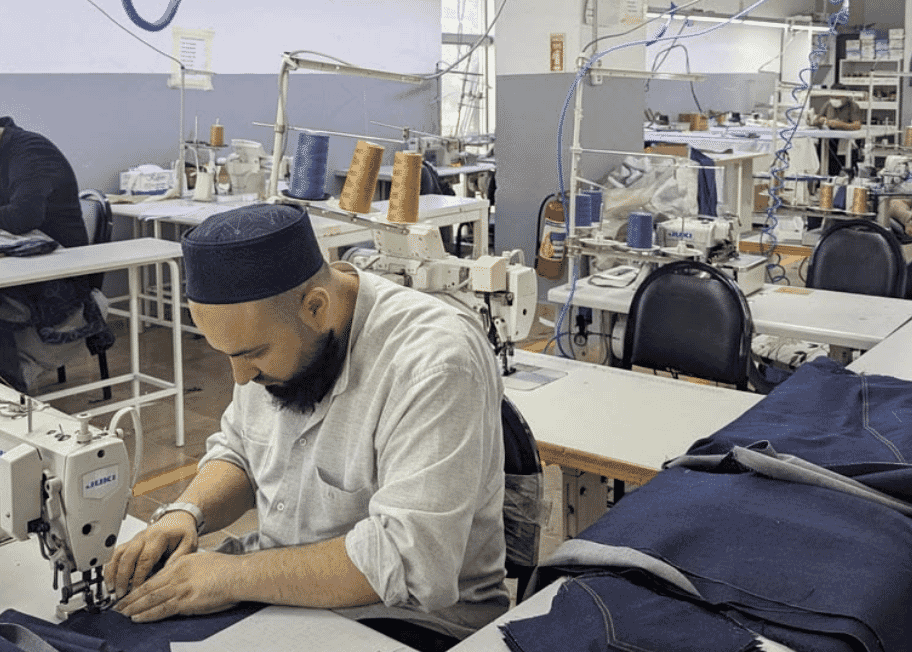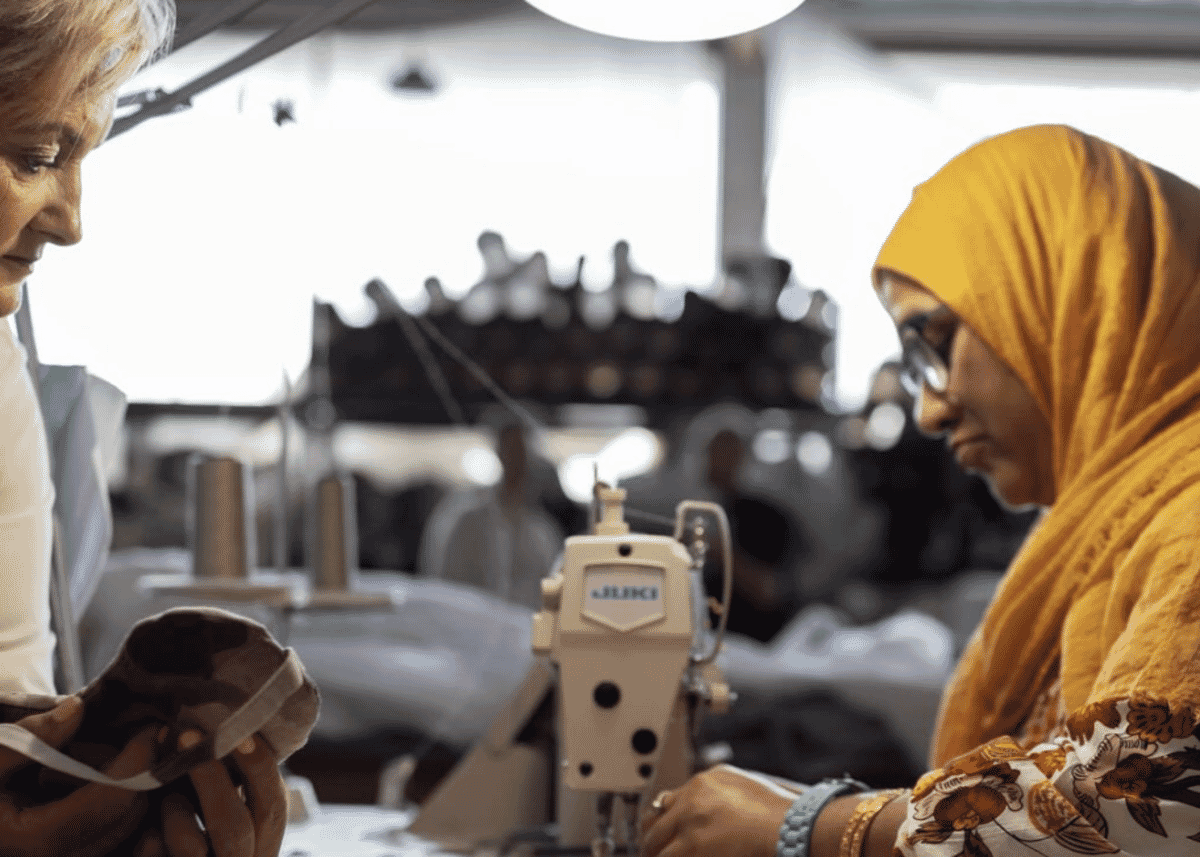
A woven shirt is the most technically demanding everyday garment a factory can be asked to make. Around twenty pieces, a collar that has to sit correctly on a neck it will never meet, cuffs, plackets, yokes and a pattern-matching requirement that punishes any sloppiness. It needs shirting fabric to match, and it is where Turkish making quality is easiest to see.
That difficulty is why shirt factories are a distinct kind of supplier. A knitwear factory can make a tee well and will produce a mediocre shirt, and the difference is visible to a customer who could not explain what they are looking at.
Shirting fabric sourcing is covered in the fabric manufacturers guide, and knit production on the T-shirt manufacturing page. This guide covers what separates a shirt factory from a general one, how to specify a shirt properly, what minimums the fabric imposes, the construction details that decide perceived quality, and how to judge a sample.
Note: Turkey Clothing Factory is a group of documented clothing factories in Turkey, producing for brands from 100 units. Construction guidance here is general shirt-making practice, not a quote from a specific factory. Duty rates were checked against official sources on 25 October 2026. We confirm exact MOQ and price with the factory when you send a brief.
Key takeaways
- Shirts are woven, not knit. A different factory, different machinery, different skill.
- Minimums come from the fabric: from 100 pieces per style on stock shirting in our group, higher when the cloth is dyed or woven for you.
- Collar construction is the quality tell. Fusing, interlining and stitch density.
- Stitches per inch is a cost lever suppliers use quietly. Specify it.
- Pattern matching on stripes and checks consumes fabric and raises the price legitimately.
- Woven shirts sit in the Denizli-Izmir cluster, close to the fabric mills.
- For UK buyers the fabric origin can decide the duty (0 or 12 percent), and shirting is widely traded.
Have a product in mind? Tell us the product, quantity and timeline and our team replies within 24 hours. Send a brief →
What Makes a Shirt Factory Different?
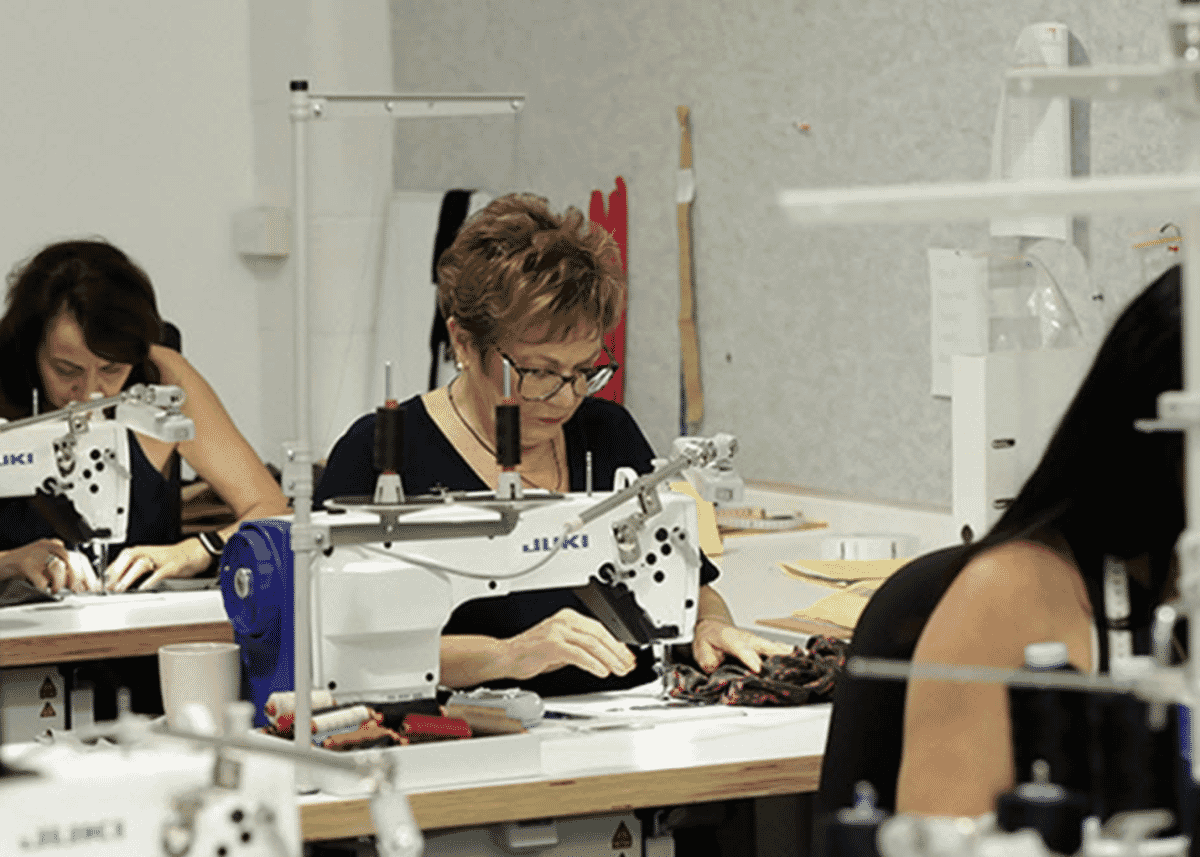
Machinery and muscle memory, in roughly equal measure. A shirt line runs specialist machines for collars, cuffs, plackets and armholes that a general garment factory simply does not own, and the operators running them have sewn the same seams many thousands of times. Neither of those is something a factory can acquire for one order, however willing it is.
The collar is where the difference is visible. A collar is several layers of fabric and interlining fused and stitched to sit against a neck it will never be fitted to, and getting it flat, symmetrical and correctly rolled is one of the hardest routine operations in the garment. Factories that make shirts daily produce it without thinking; factories that do not produce something that looks close and wears badly.
Line layout differs as much as machinery. A shirt is assembled from around twenty pieces through a sequence of operations that a shirt line is physically arranged around. A general factory reconfigures for your order and reconfigures back afterwards, which costs efficiency and shows up either in the price or in the consistency.
Ask what else the line runs. A factory producing shirts alongside dresses and jackets is a general maker, which is a legitimate business and a different proposition. One that runs shirts and only shirts has made the investment the category needs, and establishing which you are dealing with takes one question.
| Operation | Specialist equipment | What happens without it |
|---|---|---|
| Collar run-stitch, trim and turn | Collar run-stitch machine, point trimmer and turner, collar press | Uneven points, bulky edges |
| Cuff attach | Cuff setter | Puckering, inconsistent width |
| Front placket | Placket folder attachment | Wandering line, visible from across a room |
| Felled side and sleeve seams | Feed-off-the-arm machine | Twisted seams, uneven felling |
| Buttonhole and button sew | Automatic buttonhole and button machines, often with an indexer for spacing | Irregular spacing, weak attachment |
General shirt-making practice. Factories vary in which operations they have automated.
The collar is where you can see it. Points that curl, an uneven roll, a band that stands away from the neck: all are collar construction rather than fabric, and all are why a shirt from a shirt factory looks different from a shirt from a general one at the same price.
Citation Capsule: Shirt production requires specialist machinery for collars, cuffs, plackets, yokes and buttonholing that general garment factories do not typically own, alongside operator experience specific to those operations. Collar construction is the most visible indicator, with curling points and uneven roll indicating construction rather than fabric problems.

How Do You Specify a Shirt?
Six lines for the fabric and five for the construction, and the construction half is where most briefs go silent. A factory receiving fabric detail and nothing else will build to its house standard, which may be excellent or may be the cheapest thing that holds together.
Fabric: composition, weave, yarn count, weight, cuttable width and finish. Poplin, twill, oxford and chambray are weaves rather than qualities, and yarn count often tells you more about the hand than the weave name does.
Collar: style, interlining type and whether it is fused or sewn. Fused is the most common and cheaper option; sewn interlining avoids the bubbling a poorly fused collar can show and usually costs more. This single decision separates price tiers.
Stitches per inch: specify it. Higher density costs more in thread and machine time and produces a visibly better seam, and a factory quoting without a number will use its own.
Seam type: flat-felled side seams read as quality and cost more than overlocked. On a shirt this is visible when the wearer moves.
Buttons and buttonholes: material, ligne size, shank or flat, and whether buttonholes are cut before or after sewing.
Citation Capsule: Shirt specification covers fabric composition, weave, yarn count, weight, width and finish, alongside collar style and interlining method, stitches per inch, seam construction and button detail. Fused collar interlining is the most common and less expensive option, while sewn interlining usually costs more and marks a separate price tier.
What Minimum Can You Get on Shirts?
From 100 pieces per style on stock fabric in our group, and more once the cloth has to be dyed or woven for you, because the gap is upstream. A shirt line can run a short order. A weaving mill will rarely warp a loom for a short length of your particular stripe.
| Scenario | Workable minimum | What sets it |
|---|---|---|
| Stock shirting, stock colour | From 100 pieces per style | Fabric roll availability |
| Stock shirting, custom dye | Higher | The dye house minimum per lot |
| Commissioned plain weave | Higher again | The mill weaving minimum |
| Commissioned yarn-dyed stripe or check | Highest | Warping the loom to a pattern |
100 pieces per style is the starting minimum for most factories in our group; fabric-led minimums vary by mill and dye house. We confirm exact MOQ and price with the factory when you send a brief.
Yarn-dyed patterns are the expensive decision. A stripe or check woven from pre-dyed yarn requires the loom to be warped to that pattern, which is a substantial set-up. A printed stripe on plain cloth looks different and usually costs much less to set up.
Mills and fabric traders hold stock shirting in poplin, twill, oxford and chambray, and asking what is already in the warehouse is usually more productive than asking for a lower minimum on something bespoke. A mill is far more likely to say yes to the first question than the second.
There is a design consequence worth accepting. Working from stock cloth means designing around what exists rather than specifying freely, which is a constraint early on and stops mattering once volume justifies commissioning.
Citation Capsule: Shirt minimums are set by fabric rather than sewing capacity, with stock shirting in a stock colour allowing the lowest minimum (from 100 pieces per style in our group). Custom dyeing, commissioned weaving and above all yarn-dyed stripes and checks, which require the loom to be warped to the pattern, raise it.
No tech pack yet? Factories quote from specifications, not from photographs. A factory-ready single-style tech pack is $79: measurements, construction, fabric, trims and labelling in the format a Turkish factory costs from.
Why Do Stripes and Checks Cost More?
Because the pieces have to line up with each other and doing that consumes fabric. Matching a check across the front placket, at the yoke seam, down the sleeve and around the pocket means cutting every piece to the pattern repeat rather than to the most efficient marker the cutter could otherwise lay, and the additional fabric use is real rather than notional.
Expect more fabric per shirt, and more the larger the repeat. A large check costs considerably more to match than a fine stripe. Ask the factory for its fabric consumption per shirt with and without matching, and treat a check quote that never asks about matching as a warning sign.
Specify what must match. Placket and pocket are the usual minimum. Yoke, sleeve placket and side seams are the difference between a shirt that reads as considered and one that does not.
| Match point | Difficulty | Noticed by customers? |
|---|---|---|
| Patch pocket to body | Low | Immediately |
| Front placket | Low | Yes |
| Yoke to back | Moderate | Sometimes |
| Sleeve to body at armhole | High | Rarely, and it reads as quality |
| Sleeve placket | High | Rarely |
General shirt-making practice. Difficulty varies with repeat size and garment size range.
The pocket is where customers notice. A patch pocket whose check does not align with the body is one of the most visible construction failures on a shirt, and it is decided at cutting.
Citation Capsule: Pattern-matched stripes and checks require cutting to the fabric repeat rather than to the most efficient marker, which uses more fabric, and more as the repeat gets larger. Buyers should specify which points must match, with placket and pocket the usual minimum requirement.
Why Is Shirt Fit Harder Than It Looks?
Because a shirt has to fit a neck, a chest, a shoulder and an arm length independently, and many size systems collapse those into one number. A shirt that fits the chest and not the shoulder looks wrong in a way a customer feels immediately and usually cannot name.
Decide your fit philosophy before sampling. Classic, regular, slim and tailored mean different things to every factory, so a reference garment does more work than any adjective will, and it shortens the sampling rounds that follow.
Shoulder width is the measurement that cannot be altered. Chest and waist can be taken in, sleeves shortened, length adjusted. A shoulder seam falling in the wrong place is permanent, which makes it the measurement to get right on the first fitting.
Grading matters more on shirts than on knits. A tee stretches over a range of bodies. A woven shirt does not, so the increments between sizes have to be considered rather than applied mechanically from a standard table.
Ask the factory for its grading rules alongside the sample. A factory that grades thoughtfully will have views on this; one that applies a default table will say so, and both answers are useful.
Citation Capsule: Shirt fit requires neck, chest, shoulder and sleeve length to work independently, unlike knitwear which stretches across a range of bodies. Shoulder width cannot be altered after construction, making it the critical first-fitting measurement, and grading increments between sizes require consideration rather than mechanical application.
How Do You Judge a Shirt Sample?
Six checks, and most of them concentrate at the collar, placket and sleeves, where the specialist machinery either was or was not used. Shirts fail in entirely predictable places, which means a buyer who knows the six places can get a first read on make quality in a few minutes without technical training.
Collar points. Lay the shirt flat. Points should be symmetrical, lie flat and have no bulk at the tip. Curling or thickness indicates poor turning or wrong interlining.
Collar band. Fasten the top button and look at how the band sits. It should follow a neck shape rather than standing as a straight tube.
Placket. Sight down it. It should be straight, even in width along its whole length, and lie flat rather than rippling.
Sleeve set. Check both sleeves hang the same way. Twisted sleeves indicate a poorly set armhole and cannot be fixed later.
Stitch density and thread ends. Count stitches across an inch and check that ends are trimmed rather than knotted or left long.
Then wash it. Shrinkage, seam puckering after laundering and collar distortion only appear afterwards, and those are what your customer will experience.
Citation Capsule: Shirt samples are assessed at six points: collar point symmetry and flatness, collar band shape when fastened, placket straightness and even width, sleeve hang for twisting, stitch density and thread finishing, and behaviour after laundering. Most of the six concern collar, placket and sleeve construction.
A few minutes with a shirt sample
- Collar points symmetrical, flat, no bulk at the tip
- Collar band follows a neck shape with the top button fastened
- Placket straight and even in width down its full length
- Sleeves hanging the same way as each other
- Stitch density counted across an inch, thread ends trimmed
- Then wash it, because puckering and collar distortion appear afterwards
You do not need technical training for any of these. Shirts fail in predictable places, and knowing the six places is most of quality control on this garment.
Skip the search: the Turkey factory directory ($49) lists documented factories by category, city and capability, with the verification status of each. One-time payment, instant download.
Where Does the Fabric Come From?
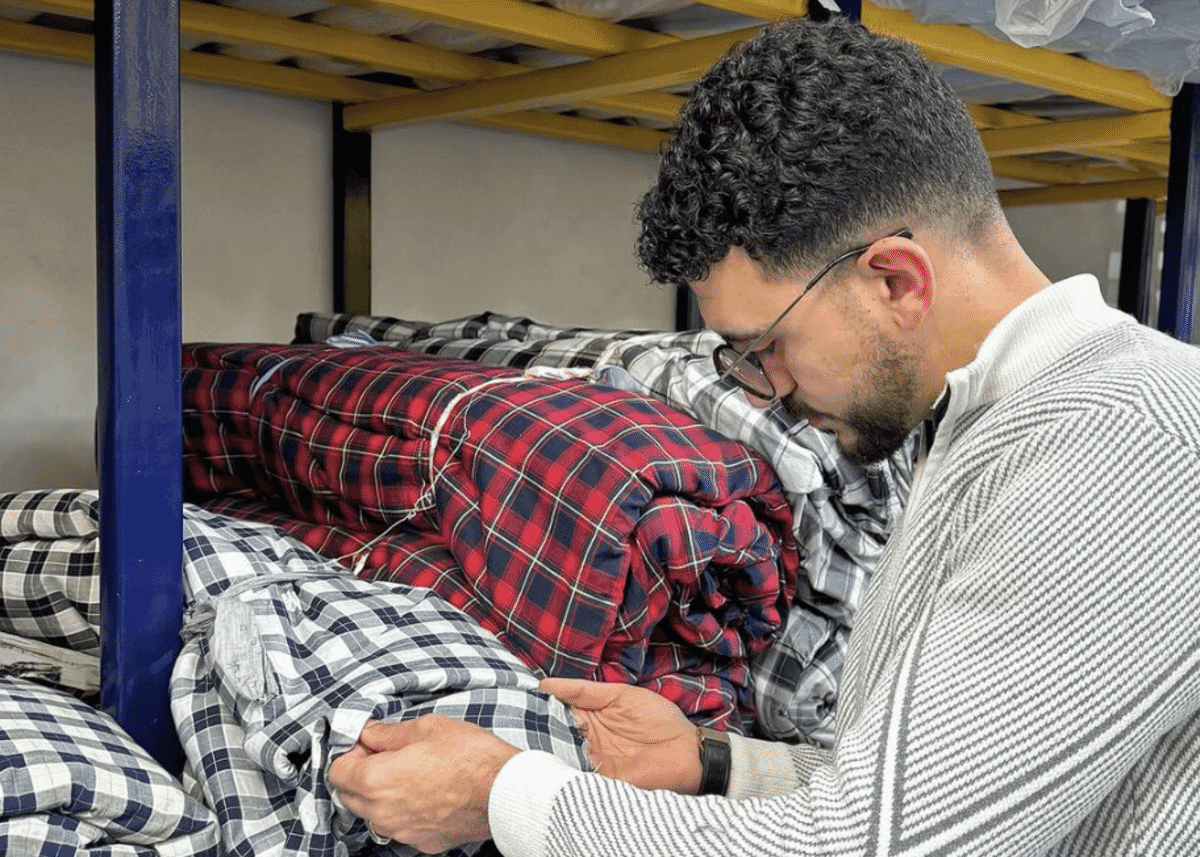
Turkey has its own weaving mills, and in our group woven shirts sit in the Denizli-Izmir cluster, close to them. Even so, the cloth in a Turkish-made shirt may have been woven elsewhere, and where it was woven matters commercially for one specific group of buyers rather than for everyone.
For UK buyers it can decide the duty. Cotton and man-made-fibre shirts from Turkey pay 0 percent into the UK with the trade agreement preference, against 12 percent without it (UK Trade Tariff). The preference applies only to goods that meet the agreement's rules of origin, proved by an origin declaration from the exporter, and EU materials can count towards origin (UK Government). A shirt sewn in Turkey from cloth woven outside Turkey and the EU may not qualify.
For EU buyers it usually does not arise. The Customs Union works on free circulation rather than origin, so shirts made in Turkey from imported fabric that was duty-paid in Turkey can enter without customs duty with an A.TR (European Commission). Ask about it if the fabric came in under a duty-suspension scheme.
For US buyers fabric origin does not change the rate. A cotton shirt made in Turkey pays the ordinary duty for its tariff line (19.7 percent for men's cotton shirts under 6205.20.20) plus the 12.5 percent Section 301 duty on products of Türkiye in force since 24 July 2026 (USITC, USTR).
Ask where the shirting was woven at the specification stage and get the answer in writing. It is a one-line question that can be worth 12 percent of the customs value to a British importer.
Citation Capsule: Shirting fabric is internationally traded, so a shirt cut and sewn in Turkey may be made from imported cloth. United Kingdom buyers should confirm fabric origin because the 0 percent UK-Turkey preference (12 percent without it) applies only to goods meeting the agreement's rules of origin, while European Union buyers rely on free circulation under the Customs Union instead.
Specify these or the factory decides
- Collar interlining: fused or sewn. This alone separates price tiers
- Stitches per inch. Quote without a number and they use their own
- Seam type: flat-felled or overlocked side seams
- What must pattern-match: placket and pocket at minimum
- Buttons: material, ligne size, and how they are attached
Each of these is a real decision with a real cost. Left unspecified, each tends to default to the cheaper option, and the shirt still arrives looking like what you asked for until it is worn.
How Do You Choose a Shirt Factory?
Find a shirt factory rather than a factory that is willing to make shirts. The specialist machinery and the operator experience are not transferable between garment types, and the collar on a first sample will usually tell you quickly which of the two you have found.
Specify the construction as carefully as the fabric. Interlining, stitch density, seam type and what must pattern-match are all decisions somebody will make, and if you do not make them the factory will usually choose the cheaper option.
Expect more sampling rounds than on a knit. A shirt has a collar, a cuff and a fit that all have to be right simultaneously, and correcting one frequently disturbs another. Plan for more than one round where one might do on a tee; it prevents the schedule collapsing at the end.
Decide the pattern-matching rule before sampling, not after. Which seams must match, and how closely, is a cost decision and a specification line. Left unstated, the factory may match only where it is cheap to, and you discover which at inspection.
Buy the fabric conversation early. Shirting is internationally traded, so the cloth in your shirt may not be Turkish even when the shirt is made in Turkey, and that matters for the duty position as much as for the hand of the cloth.
And ask where the cloth was woven. On shirting it is a genuine question rather than a formality, and for a UK buyer it can be worth more than a negotiation on the making charge.
Frequently Asked Questions
What is the minimum order for shirts in Turkey?
Most factories in our group start at 100 pieces per style for shirts made from stock shirting in a stock colour. A custom dye, a commissioned weave or a yarn-dyed stripe or check raises the minimum, because the dye house or weaving mill sets its own fabric minimum. We confirm the exact figure for your shirt before you commit.
How do I tell a good shirt from a bad one?
Look at the collar first. Points should be symmetrical and flat with no bulk at the tip, and the band should follow a neck shape rather than standing as a tube. Then check the placket is straight and even, and that both sleeves hang the same way.
Why do checked shirts cost more?
Because pattern matching means cutting each piece to the fabric repeat rather than to the most efficient marker, which uses more fabric; the larger the repeat, the more it uses. A factory quoting a check without asking which points must match may not be planning to match them.
What is collar interlining?
The stiffening layer inside a collar. Fused interlining is bonded with heat-activated adhesive and is the most common, cheaper option. Sewn (non-fused) interlining is stitched in, avoids the bubbling a poorly fused collar can show after laundering, and usually costs more. The choice separates price tiers and shows over time.
Does shirt fabric origin affect import duty?
For United Kingdom buyers, yes. The UK-Turkey agreement grants 0 percent instead of 12 percent on shirts only to goods that meet its rules of origin, and EU materials can count towards origin, so a shirt sewn in Turkey from cloth woven elsewhere may lose the preference. For EU buyers the Customs Union works on free circulation rather than origin. For US buyers there is no preference either way.
Send the fabric, the construction detail and the quantity by colourway. We place your production with the factory in our group set up for shirting, our team replies normally within 24 hours, and you deal with the factory directly. No commissions. No markups. The factory bills you directly.
Get in contact Download the directory ($49)Need a tech pack? Get a factory-ready single-style tech pack for $79. See what's included.
Editorial note: trademarks referenced here are the property of their respective owners. Construction guidance is general shirt-making practice, and minimums beyond our group's usual 100-piece starting point depend on the mill, dye house and product. Duty rates were checked against the official sources below on 25 October 2026 and can change. This is general guidance, not customs advice: confirm the classification and duty position for your own product before committing.
Sources
- UK Government: summary of the UK-Turkey trade agreement, including rules of origin, EU materials and the origin declaration.
- UK Trade Tariff: third-country and Turkey preference rates for men's cotton shirts (commodity 6205200090), checked 25 October 2026.
- European Commission, Access2Markets: the EU-Turkey Customs Union and what it covers.
- European Commission, Taxation and Customs Union (2024): electronic A.TR movement certificate rules.
- USITC Harmonized Tariff Schedule: general rate for men's cotton shirts (6205.20.20) and the additional duty on products of Türkiye (heading 9903.05.79), checked 25 October 2026.
- Office of the US Trade Representative (July 2026): fact sheet on the Section 301 action imposing a 10 or 12.5 percent tariff on 60 trading partners.