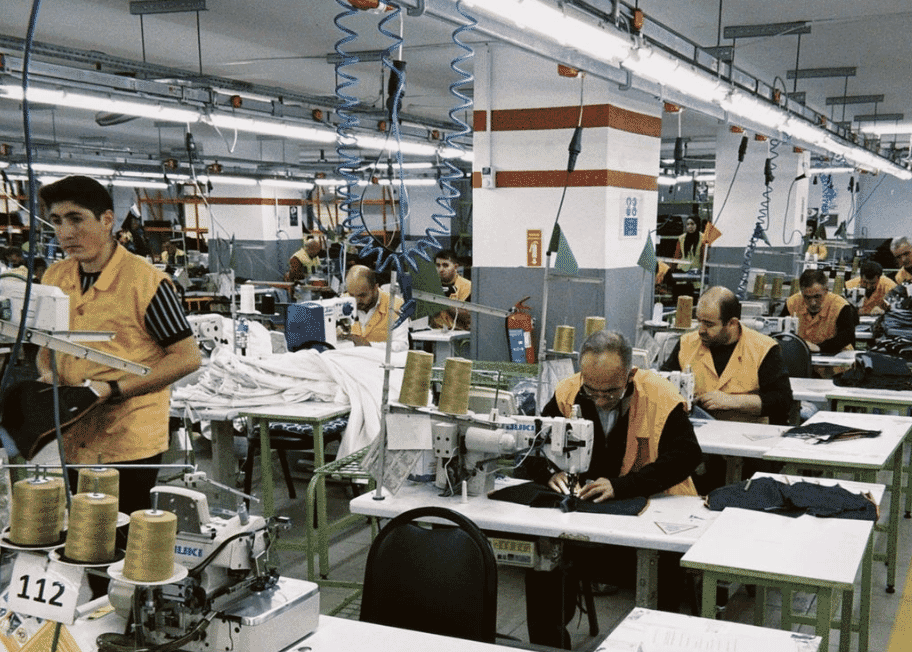
Importing from Turkey is unusually forgiving for a European or British buyer and unusually ordinary for an American one. The reason is not the goods or the factories. It is that the EU and Turkey have shared a customs union since 1996, and the paperwork that follows from that removes most of what makes importing difficult elsewhere.
What remains is a sequence: decide the destination, choose a supplier, agree terms, arrange freight, clear customs. Each step has one decision that matters more than the others, and most first-time importers discover which one three weeks too late.
The rates themselves are in the import duty guide and the certificates in the export documents guide. This guide covers the sequence end to end, what each stage actually requires, the terms that decide who carries which risk, and the mistakes that cost money on this specific route.
Note: Turkey Clothing Factory is a group of documented clothing factories in Turkey, producing for brands from 100 units. Ranges in this guide are given as market ranges, not as quotes from a specific factory. We confirm exact MOQ and price with the factory when you send a brief.
Key takeaways
- Decide the destination first. It determines your duty, your paperwork and whether the fabric origin matters at all.
- You need an EORI number to import into the EU or UK. Apply before you order, not before you ship.
- Incoterms decide who carries the risk, and FOB is the default worth understanding.
- Road freight is the point of Turkey. Days to Western Europe, against weeks by sea from Asia.
- You are the importer of record and legally responsible for classification and valuation, not your supplier.
- A customs broker is worth it on a first import and optional afterwards.
- The most expensive mistakes happen at specification, weeks before anything ships.
Have a product in mind? Tell us the product, quantity and timeline and our team replies within 24 hours. Send a brief →
What Is the Actual Sequence?
Seven steps, and the order matters far more than the count because three of them are effectively irreversible once passed. Most guides present importing as a shipping process that starts when the goods are ready. It is really a decision process in which the shipping is the last and by some distance the easiest part, and the expensive errors are all made before anything is manufactured.
| Step | The decision that matters | Reversible? |
|---|---|---|
| 1. Fix the destination market | Sets duty, paperwork and origin rules | No, not cheaply |
| 2. Register as an importer | EORI for the EU or UK | Yes, but slow if left late |
| 3. Choose the supplier | Factory, trader or wholesale market | Yes, before the deposit |
| 4. Agree terms and Incoterms | Who pays and who carries risk where | Hard once the deposit is paid |
| 5. Confirm the preference document | A.TR for the EU, origin statement for the UK | Painful retrospectively |
| 6. Arrange freight | Road, air or sea | Yes |
| 7. Clear customs and pay | Classification and valuation | Correctable, at a cost |
Compiled from published customs guidance for the EU, UK and US. Requirements vary by destination and product.
Notice where the irreversible steps sit. They are at the front, before anything physical happens, which is the opposite of how importing feels when you are doing it for the first time.
Citation Capsule: Importing from Turkey follows seven steps: fixing the destination market, registering as an importer, choosing a supplier, agreeing terms and Incoterms, confirming the preference document, arranging freight, and clearing customs. The decisions that are hardest to reverse occur in the first five steps, before any goods move.

What Do You Need Before You Can Import?
An importer registration, and in the EU and UK that means an EORI number. It is free, it takes days rather than weeks in most member states, and not having one stops a consignment at the border with storage charges accruing.
For the EU and UK, apply for an EORI through your own customs authority. One number covers all your imports. Get it when you decide to import, not when the goods are loaded, because the application is quick and the consequence of not having it is expensive.
For the US, you need an importer of record number, usually your employer identification number, and a customs bond for formal entries, which covers most commercial shipments (US Customs and Border Protection). A broker can arrange the bond.
You do not need a Turkish entity, an agent or a licence. Buyers occasionally ask this and the answer is no: a foreign company can buy from a Turkish exporter and import into its own market directly, which is worth knowing before paying an intermediary to arrange it.
An EORI is not a customs broker. The number identifies you to customs; it does not file anything on your behalf. Importers regularly obtain one, assume they are now set up, and discover at the border that no declaration has been made because nobody was appointed to make it.
The importer of record carries the liability. Whoever is named in that role owns the classification, the valuation and the duty, regardless of who prepared the paperwork. Agreeing to be importer of record on somebody else's shipment, which occasionally gets proposed, means accepting a liability for goods you did not specify.
A US customs bond comes in two forms. A single-entry bond covers one shipment and a continuous bond covers a year. For anyone importing more than a handful of times, the continuous bond is the cheaper arithmetic, and it is worth pricing both before the first shipment rather than defaulting to single entry.
VAT registration is a separate question. An EORI lets goods enter; it says nothing about whether you can recover import VAT. A business registered for VAT in its own market generally can, and postponed accounting where it is available removes the cash cost at the frontier rather than the cost itself.
Citation Capsule: Importing from Turkey into the European Union or United Kingdom requires an EORI number obtained free from the buyer's own customs authority. United States importers need an importer of record number and a customs bond for commercial shipments. No Turkish entity, agent or import licence is required in any of these markets.
Which Incoterms Should You Use?
FOB for a first import, and move to EXW only when you have a forwarder you trust. Incoterms decide where risk and cost transfer from seller to buyer, and choosing badly means either paying for things twice or discovering nobody arranged them at all.
| Term | Seller does | You do | Suits |
|---|---|---|---|
| EXW | Makes goods available at the factory | Everything else, including Turkish export clearance | Experienced buyers with a Turkish forwarder |
| FCA | Delivers to a named point, clears for export | Main freight onward | Common and workable |
| FOB | Delivers to the port, clears for export | Main freight, insurance, import clearance | First imports. Clean risk split |
| CIF | Freight and insurance to your port | Import clearance and duty | Buyers who want one number |
| DDP | Everything, duty included | Take delivery | Convenient, and you lose visibility of costs |
Simplified summary of common Incoterms as applied on this route. The published Incoterms rules govern; confirm the exact obligations for your contract.
EXW is the one that catches people. Under EXW the buyer is technically responsible for export clearance from Turkey, which a foreign company cannot easily do. In practice the seller usually handles it anyway, and "in practice" is a poor basis for a contract.
DDP looks attractive and hides the numbers. A single delivered price means you cannot see the duty, the freight or the margin, and on this route the duty may well be zero. Paying a DDP premium for a zero-duty shipment is a common and invisible loss.
Citation Capsule: FOB terms suit first imports from Turkey because risk transfers cleanly at the port with the seller handling export clearance. EXW makes the buyer responsible for Turkish export clearance, which a foreign company cannot easily perform. DDP conceals the duty, freight and margin components, which matters on a route where duty may be zero.
How Should You Ship It?
By road, almost always, and that is the entire reason to import from Turkey rather than Asia. A truck reaches most of Western Europe in days. Groupage services consolidate partial loads, so you do not need a full trailer to use the route.
Road, full or groupage. The default. Days to Western Europe, and the cost per kilo sits between air and sea. For any order under a full trailer, groupage is the normal arrangement.
Air for small, urgent or high-value. One to two days to a European hub. Expensive per kilo and frequently worth it when an empty rail is costing you more than the freight.
Sea for heavy, bulky, non-urgent. The US lane has no road option at all. Towels and home textiles sometimes justify it. For garments it usually means you have given up Turkey's main advantage, and the sourcing decision deserves a second look.
The US route is different because road is not an option. Sea takes weeks and air is costly, which combines with full duty, plus an additional 12.5 percent under Section 301 since 24 July 2026, to make the American case for Turkey rest on capability rather than economics.
Citation Capsule: Road freight from Turkey reaches most of Western Europe in days, with groupage services consolidating partial loads so a full trailer is not required. Air freight to a European hub takes one to two days at higher cost per kilo. Sea freight surrenders the principal advantage of sourcing from Turkey for European buyers.
What Happens at Customs?
An entry is filed declaring what the goods are, what they are worth and where they came from, and duty is assessed on that. You are the importer of record, which means the classification and the valuation are legally your responsibility even when a broker prepares them (US Customs and Border Protection).
Classification determines the rate. Your supplier's opinion is not binding on your customs authority, and a disagreement discovered at the border is worse than one discovered at specification.
Valuation determines the base. The US generally assesses on FOB, the EU and UK on CIF including freight and insurance to the border.
Preference determines whether any of it is payable, and who your supplier actually is decides who can issue it. The A.TR for the EU, the origin statement for the UK, and nothing for the US.
Should you use a broker? On a first import, yes. The fee is small against the cost of a misclassification or a held consignment, and a good broker will tell you before shipping whether your paperwork will work. After three or four consignments the process is repetitive enough to bring in-house if you want to.
Citation Capsule: At customs the importer of record is legally responsible for classification and valuation even where a broker prepares the entry. Classification determines the duty rate, valuation determines the base, and the preference document determines whether duty is payable at all. A supplier's classification opinion does not bind the importing customs authority.
Before you place the first order
- EORI number obtained, if you are importing into the EU or UK
- Destination fixed, because it sets the duty and the paperwork
- Incoterm agreed in writing, and FOB unless you have a reason
- Preference document confirmed with the exporter of record
- Classification checked against your own authority, not the supplier's view
- Forwarder engaged before production finishes, not after
Every item on this list is cheap now and expensive at the border. The registration alone can hold a consignment for days while storage charges run.
Try it free: pressure-test your landed cost with the Turkey production cost calculator. 60 seconds, no email required.
What Goes Wrong on This Route?
Five things, and four of them are decided before the goods move. That pattern is consistent enough to be useful: if something has gone wrong at the border, the cause is almost always a decision made weeks earlier rather than an error in the shipping.
| Mistake | What it costs | Decided at |
|---|---|---|
| No EORI when goods arrive | Days of storage, delayed clearance | Before the first order |
| No preference document | Full duty on goods that qualified | Before the deposit |
| Imported fabric, UK destination | Origin fails, full duty | Fabric selection |
| Agreed EXW without a Turkish forwarder | Nobody clears the export | Terms negotiation |
| Documents disagree | Clearance suspended, days lost | Before loading |
Compiled from published customs guidance. Consequences are typical rather than universal and vary by destination and authority.
The one that costs most is the third, and it is invisible until the entry is filed. A UK buyer who never asked where the fabric came from can lose the whole preference on goods that were made in Turkey by a Turkish factory, because making is not the same as originating.
Citation Capsule: Five failures recur when importing from Turkey: missing importer registration on arrival, no preference document, imported fabric preventing United Kingdom origin, EXW terms agreed without a Turkish forwarder to clear the export, and mismatched documents suspending clearance. Four of the five are determined before the goods move.

What Does a First Import Actually Look Like?
Quieter than most people expect, provided the front half was done properly. A first consignment from Turkey to a European buyer holding an EORI number, on FOB terms, with a confirmed A.TR certificate and a groupage booking in place, is genuinely uneventful from end to end. That is the normal outcome on this route rather than the lucky one, which is worth saying because importing has a reputation that the Turkey lane does not really deserve.
The timeline runs roughly: production finishes, the exporter prepares the certificate, the forwarder collects, the truck runs for three to seven days, the broker files the entry, and the goods are released. Duty is zero, so there is nothing to pay beyond freight and clearance.
Where it stops being uneventful is when one of those links was assumed rather than arranged. The forwarder nobody booked, the certificate nobody asked for, the registration nobody applied for. None of these is difficult and all of them take time you have not allowed.
The five decisions that decide everything
- Destination, which sets duty, paperwork and whether fabric origin matters
- Registration, obtained before you order rather than before you ship
- Incoterm, in writing, and FOB unless you have a specific reason
- Preference document, confirmed with whoever is the exporter of record
- Forwarder, engaged before production finishes
None of these is difficult and all of them take time you have not allowed. Do them in this order and the shipping stage is genuinely dull.
Importing From Turkey
Do the front half properly and the back half looks after itself. Fix the destination, get registered, agree FOB, confirm the preference document, and engage a forwarder before production ends. That is five decisions and none of them is hard.
For a European or British buyer this is one of the easiest import routes there is: zero duty, road freight, mature customs infrastructure and a shared customs union going back to 1996. For an American buyer it is an ordinary import at the full rate plus an additional 12.5 percent under Section 301, and the reason to do it has to be the product rather than the process.
Frequently Asked Questions
What do I need to import from Turkey?
For the European Union or United Kingdom, an EORI number from your own customs authority, which is free and takes days. For the United States, an importer of record number and a customs bond for commercial shipments. You do not need a Turkish entity, agent or import licence in any of these markets.
Which Incoterms should I use importing from Turkey?
FOB for a first import, because risk transfers cleanly at the port and the seller handles Turkish export clearance. Avoid EXW unless you have a Turkish forwarder, since it makes you responsible for export clearance a foreign company cannot easily perform.
How long does shipping from Turkey take?
Three to seven days by road to most of Western Europe, one to two days by air to a European hub, and weeks by sea. Road is the default and the main reason to source in Turkey rather than Asia. Groupage services consolidate partial loads.
Do I need a customs broker?
On a first import, yes. The fee is small against a misclassification or a held consignment, and a good broker will confirm before shipping whether your paperwork will work. After three or four consignments the process is repetitive enough to bring in-house.
Who is responsible if the classification is wrong?
You are. The importer of record carries legal responsibility for classification and valuation even where a broker prepares the entry and even where the supplier suggested the code. A supplier's opinion does not bind your customs authority.
Send the product, the quantity and where the goods are landing. We place your production with the factory in our group built for that product, normally within 24 hours, and tell you which preference document applies before you commit. No commissions. No markups. The factory bills you directly.
Get in contact Download the directory ($49)Need a tech pack? Get a factory-ready single-style tech pack for $79. See what's included.
Editorial note: all company names, certification marks and trademarks referenced here are the property of their respective owners. MOQ, cost and lead-time figures are market ranges compiled from the published sources listed below, not quotes from any individual factory, and they vary by product, fabric and season. Tariff figures were correct at the date of publication and the position continues to move. Always verify your own HTS classification and confirm terms directly with the factory before committing.
Sources
- Sheng Lu, FASH455, University of Delaware (2025): WTO-based analysis of global textile and apparel trade.
- US Census Bureau: Trade in Goods with Turkey, the official monthly import and export series.
- European Commission, Access2Markets: the EU-Turkey Customs Union and what it covers.
- European Commission, Taxation and Customs Union (2024): electronic A.TR movement certificate rules.
- Irish Revenue: Turkey Customs Union and preferential origin, including A.TR and EUR1 treatment.
- Istanbul Apparel Exporters Association: Turkish apparel export sector profile and membership.
- Global Organic Textile Standard: public database of GOTS-certified suppliers.
- Textile Exchange: certified company finder for recycled content and responsible fibre standards.
- OEKO-TEX Label Check: public verification of certificate numbers.
- amfori BSCI: social audit system documentation.
- USITC Harmonized Tariff Schedule: the current classification schedule and duty rates.
- Office of the US Trade Representative (July 2026): fact sheet on the Section 301 action, which adds 12.5 percent to US duty on products of Türkiye entered from 24 July 2026 (HTS heading 9903.05.79).
- US Customs and Border Protection: tips for new importers, including importer-of-record responsibility.
- European Commission, Directorate-General for Trade (2025): EU trade relations with Turkey, including bilateral trade values and partner ranking.
- UK Government: summary of the UK-Turkey trade agreement, in force since 1 January 2021.