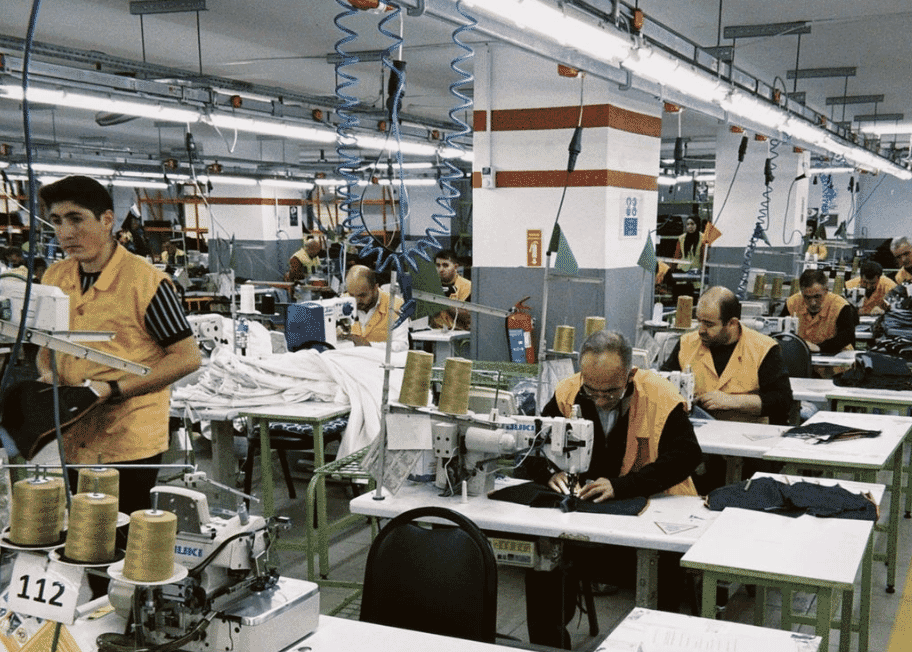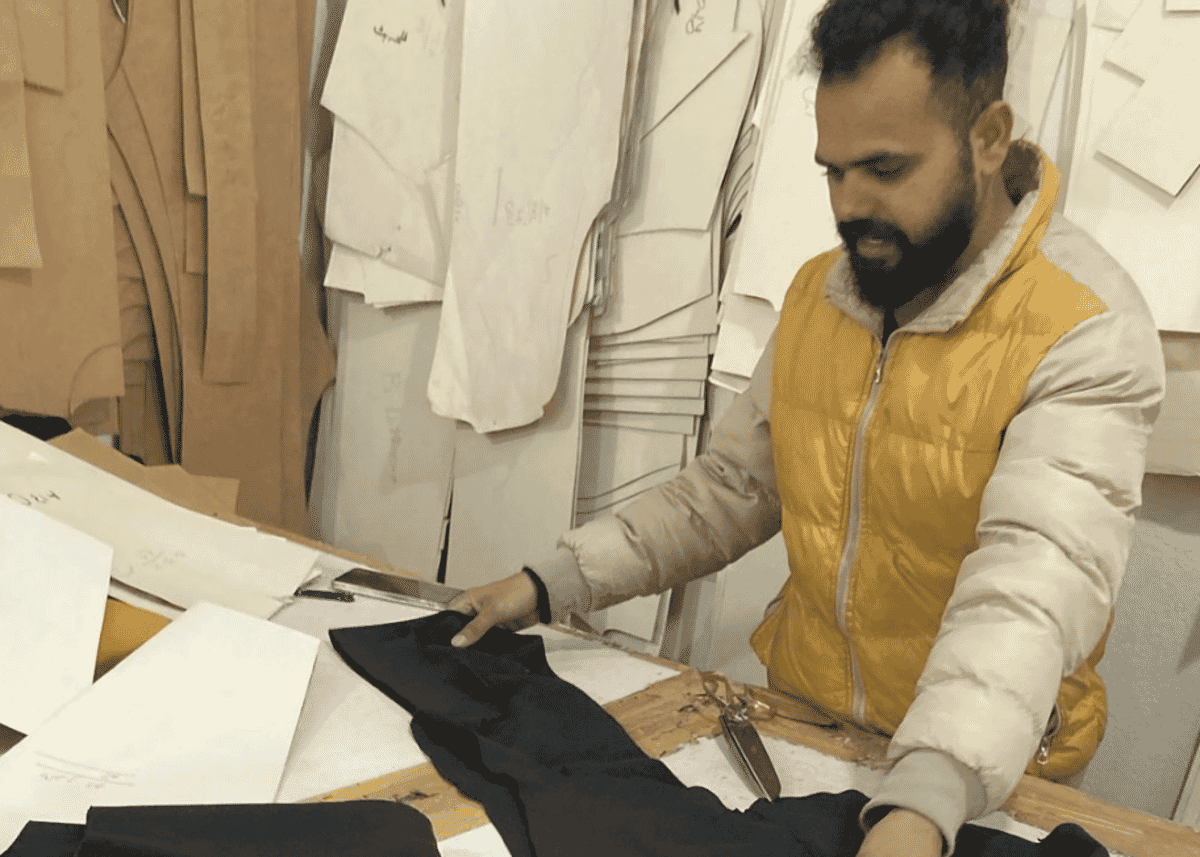
There is no wholesale price for Turkish clothing, only a set of prices that depend on what you are buying, how much of it, and from whom. A brand comparing two quotations is usually comparing a showroom stock price against a factory making charge, which are different numbers describing different transactions.
The useful question is not what things cost but what drives the cost. The answer is broadly consistent across categories: fabric is often around half of it, quantity moves the making charge far less than buyers expect, and the destination decides whether duty exists at all.
The fabric side of this is in the fabric manufacturers guide, and the duty arithmetic in the import duty guide. This guide covers how Turkish wholesale pricing is structured, what actually moves a unit price, why quantity matters less than it should, how to read a quotation properly, and what a fair price looks like.
Note: Turkey Clothing Factory is a group of documented clothing factories in Turkey, producing for brands from 100 units. Cost shares and freight figures in this guide are indicative illustrations, not quotes from a specific factory or measured market data. Duty rates were checked against official sources on 24 October 2026. We confirm exact MOQ and price with the factory when you send a brief.
Key takeaways
- Fabric is often around half of FOB on basic garments (indicative). It moves the price more than anything you can negotiate.
- Quantity moves the making charge less than buyers expect past a few hundred pieces.
- Showroom stock and factory production are different prices for different things.
- Turkey is rarely the cheapest origin at FOB.
- Compare landed, not FOB. Zero duty into the EU, and into the UK for originating goods, changes the arithmetic. Into the US, Turkish goods now pay an extra 12.5 percent.
- A quotation without Incoterm, fabric spec and quantity basis cannot be compared to another.
- A very low quote is a question, not a win, in a contracting sector.
Have a product in mind? Tell us the product, quantity and timeline and our team replies within 24 hours. Send a brief →
What Is Actually in the Price?
Five lines, and the first of them dominates everything else. Once you can see the structure clearly, you know which parts of a quotation are genuinely negotiable and which are simply a supplier passing on a cost it does not control any more than you do. That distinction saves a great deal of wasted correspondence.
| Line | Indicative share of FOB | Negotiable? | What actually moves it |
|---|---|---|---|
| Fabric | 45 to 55 percent | Yes, through specification | Fibre, weight, stock or commissioned |
| Cut, make, trim | 25 to 35 percent | A little | Construction complexity, not volume |
| Trims and packaging | 8 to 12 percent | Yes | Labels, hardware, polybags, hangtags |
| Wastage | 3 to 6 percent | Indirectly | Fabric width against marker efficiency |
| Factory margin | 8 to 15 percent | Somewhat | Order size and how much they want you |
Indicative shares for a basic cut-and-sew garment, given as a costing illustration rather than measured data for Turkey. Real shares vary widely by fibre, construction and order size and will not total exactly 100 percent on any single style. Ask each supplier for its own breakdown.
Brands negotiate the second line and accept the first. In our view that is the central mistake in apparel pricing, and it is not specific to Turkey. On the indicative shares above, a ten percent cut in a making charge worth 25 to 35 percent of FOB moves the unit price by about 2.5 to 3.5 percent, while a change of fabric on a line worth around half the price can move it several times as much.
Ask for the fabric cost broken out before you ask for a discount. A supplier that will not separate it is either a trader or is hiding a margin inside the cloth, and both are worth knowing.
Citation Capsule: As an indicative costing illustration for a basic cut-and-sew garment, fabric is often around half of FOB, cut-make-trim a quarter to a third, and trims, packaging, wastage and factory margin the rest. Because fabric is the larger line, the fabric specification usually moves a unit price more than negotiating the making charge does.

Why Does Quantity Move the Price So Little?
Because the cost that scales with volume is already small by the time you reach a few hundred pieces. Set-up, marker making and first-off approval are spread across the run, and past a few hundred units much of that spreading has already happened. After that you are buying the same fabric and the same minutes of sewing.
The steep part of the curve is early. Moving from one hundred to a few hundred pieces usually reduces the unit price noticeably, because set-up and marker costs are being shared across more units. Tripling an order beyond a thousand usually changes it far less than buyers assume, since what remains is mostly fabric and sewing time.
Where volume does move things is fabric. A larger fabric order reaches better mill pricing and may cross a threshold from stock cloth to commissioned, which is a different and usually lower price per metre.
And it moves attention. A factory quoting a brand it wants will sharpen its margin line. That is a relationship effect rather than an arithmetic one, and it is real.
The practical consequence is that inflating an order to chase a price break frequently does not work. You can end up with stock you did not need and a unit price only slightly lower.
Citation Capsule: Order quantity usually moves apparel unit prices most at small runs, where set-up and marker costs are spread across more pieces. At larger runs the remaining cost is mostly fabric and sewing time, which stay roughly the same per piece, so increasing an order from 1,000 to 3,000 pieces usually changes the unit price less than buyers expect, mainly through better fabric pricing.
What Are You Actually Comparing?
Three different prices that buyers routinely put side by side as though they were alternatives. A showroom stock price, a factory FOB price and a delivered DDP price describe different scopes, and comparing them directly produces a conclusion that is simply wrong.
| Price type | What it includes | What it excludes | Comparable to |
|---|---|---|---|
| Showroom stock price | Finished goods, ready now | Freight, duty, your specification | Other stock prices only |
| Factory FOB | Goods at the port, export cleared | Freight, insurance, duty | Other FOB quotes |
| CIF | FOB plus freight and insurance | Duty and clearance | Other CIF quotes |
| DDP | Everything, delivered | Nothing, and it hides the split | Other DDP quotes |
Simplified summary of scope by Incoterm. FOB and CIF are rules for sea and inland waterway transport; for road or air freight from Turkey the equivalents are FCA and CPT or CIP. The published ICC Incoterms 2020 rules govern the exact obligations (ICC).
DDP is the one that misleads most. A single delivered number conceals the duty component, and on Turkish goods into the EU, or into the UK when they meet the origin rules, that component may well be zero. Paying a DDP premium on a zero-duty shipment is a loss you never see.
Specify the Incoterm yourself and ask everyone to quote on it. Three comparable numbers are worth considerably more than five incomparable ones.
Citation Capsule: Showroom stock prices, factory FOB, CIF and DDP quotations describe different scopes and cannot be compared directly. DDP conceals the duty component, which on Turkish goods entering the European Union, or the United Kingdom when they meet the origin rules, may be zero, meaning a DDP premium can be paid on a shipment carrying no duty at all.
Try it free: pressure-test your landed cost with the Turkey production cost calculator. 60 seconds, no email required.
Why Does Landed Cost Change the Answer?
Because Turkish goods in free circulation enter the European Union without customs duty under the Customs Union (European Commission), and enter the United Kingdom at 0 percent when they meet the UK-Turkey origin rules (UK Government), against a 12 percent UK rate on most clothing without a preference (UK Trade Tariff, checked 24 October 2026). An origin with no EU preference, China for example, pays up to 12 percent on most clothing entering the EU. Some Asian origins have EU preferences of their own, so check the rate for the country you are comparing. A Turkish quote that looks clearly higher at FOB can land much closer than the FOB comparison suggests.
Work it through with an illustration. A cotton T-shirt quoted at $6.00 FOB from Turkey and $5.00 FOB from China looks like a clear loss. Into the EU, with an assumed $0.45 a piece for road freight, the Turkish goods land at about $6.45 with no duty. With an assumed $0.60 a piece for sea freight, the Chinese goods pay 12 percent duty on cost plus freight, about $0.67, and land at about $6.27, weeks later, with cash tied up in transit throughout. A one-dollar gap at the factory becomes under twenty cents at the border.
Into the United States there is no preference for Turkish goods. The ordinary Harmonized Tariff Schedule rate applies, 16.5 percent on a cotton knit T-shirt, plus an additional 12.5 percent on products of Türkiye under the Section 301 action in force since 24 July 2026 (heading 9903.05.79, USITC; USTR; both checked 24 October 2026). On the $6.00 T-shirt that is about $1.74 of duty. Competing origins carry their own additional US duties, which differ by country, so compare each at the rates for your entry date.
This is why the same Turkish quote can be competitive for an EU or UK range and much harder to justify for a US one, and why brands selling into several markets compare landed cost market by market.
Citation Capsule: Turkish apparel in free circulation enters the European Union without customs duty under the Customs Union, while origins with no EU preference, such as China, pay up to 12 percent on most clothing. On an illustrative $6.00 Turkish and $5.00 Chinese T-shirt, the one-dollar FOB gap shrinks to under twenty cents landed in the EU. Into the United States, Turkish goods pay the ordinary tariff rate plus an additional 12.5 percent under Section 301 since 24 July 2026.
How Do You Read a Quotation?
By checking six things before you look at the number at all. A quotation missing any of them is not a quotation, it is an indication, and comparing indications is how brands end up choosing the wrong supplier on the basis of the wrong figure.
The Incoterm. Without it you do not know what is included. This is the most common omission.
The fabric specification. Composition, construction, weight and width. A price for unspecified cotton jersey means nothing.
The quantity it is based on. Prices quoted at 1,000 pieces do not apply at 200, and a supplier will usually quote its comfortable quantity unless told otherwise.
What is in the trims line. Labels, hangtags, polybags and hardware are sometimes included and sometimes not, and on the indicative shares above they are around 8 to 12 percent of FOB.
Sample costs and whether they are credited. Some factories credit sampling against a bulk order, some do not, and many do not say either way unless asked. Development costs such as patterns and samples sit outside the quoted garment price unless you ask.
Payment terms. A deposit percentage and a balance trigger are part of the price, because cash tied up for three months has a cost.
Citation Capsule: A comparable Turkish apparel quotation must state the Incoterm, the full fabric specification, the quantity the price is based on, what the trims line includes, sample costs and whether they are credited against bulk, and payment terms. Quotations missing any of these cannot be meaningfully compared against one another.
Six things before you look at the number
- Incoterm, stated. The most common omission
- Fabric spec: composition, construction, weight, cuttable width
- Quantity basis. A price at 1,000 does not apply at 200
- Trims line contents. Labels, hangtags, polybags, hardware
- Sample cost, and whether it is credited against bulk
- Payment terms. Cash tied up for three months has a cost
Specify all six yourself in the enquiry and every supplier prices the same thing. The spread between comparable quotes is usually much narrower than the spread between unprompted ones.
No tech pack yet? Factories quote from specifications, not from photographs. A factory-ready single-style tech pack is $79: measurements, construction, fabric, trims and labelling in the format a Turkish factory costs from.
What Does a Suspiciously Low Quote Mean?
In a contracting sector, it can mean distress rather than efficiency. Social Security Institution (SGK) data reported by Textilegence showed 2,147 fewer textile and clothing businesses in Turkey in March 2025 than in December 2024, and 79,584 fewer jobs than a year earlier (Textilegence, June 2025). A factory quoting far below what other suppliers quote you may be one that needs the order rather than one that has found a better way.
Ask what is different. A genuinely lower price has a reason: a fabric already in stock, a quiet period, a machine configuration that suits your product. Those are good reasons and a supplier will explain them readily.
| What was cut | Visible in a photo? | Where it shows up |
|---|---|---|
| Lighter fabric than specified | No | Hand feels thin. Sell-through drops |
| Lower yarn count | No | Pilling and shedding after washing |
| Fewer stitches per inch | No | Seams fail in wear |
| Skipped finishing | Sometimes | Shrinkage and hand after first wash |
| Cheaper trims | Sometimes | Zips and fastenings fail first |
General quality-control checks. All five can produce a garment that photographs correctly and underperforms in use.
The bad reasons are substitution and corner-cutting. A lighter fabric than specified, a lower yarn count, fewer stitches per inch, skipped finishing. All of these can produce a cheaper garment that looks correct in a photograph and fails in a customer's hands.
The worst reason is that they will not complete. A deposit paid to a company that stops trading is usually hard to recover, which is why checking the company in the Turkish trade registry before paying a deposit is worth the few minutes.
Citation Capsule: Social Security Institution data reported by Textilegence (June 2025) showed 2,147 fewer Turkish textile and clothing businesses in March 2025 than in December 2024. In a contracting sector, a quotation far below other suppliers' can signal financial distress rather than efficiency. Legitimate lower prices have identifiable causes such as stock fabric or quiet capacity, which suppliers explain readily when asked.
What Does a Fair Price Look Like?
One you can decompose into its parts. If a supplier can tell you the fabric cost, the making charge, the trims line and roughly where the margin sits, you are dealing with a company that knows its own economics. Where those numbers also look sensible against the indicative shares above, the price is defensible whether or not it is the lowest figure you received that week.
Turkey is rarely the lowest-cost origin. Expecting the unit prices of the largest Asian exporters from a Turkish factory is expecting the wrong thing, and the quotes will say so. Turkish suppliers compete on duty-free access to Europe, speed and specific capability rather than on unit cost.
Judge the whole arrangement. A slightly higher price from a factory that answers quickly, samples in a fortnight and ships on time is cheaper than a lower price that costs you a season.
The single best test is whether the supplier will break the price down. Those that will are usually the ones worth working with, and the willingness itself tells you more than the arithmetic does.
Reasons a quote can legitimately be lower
- Fabric already in stock, so no mill minimum and no dye lot
- Quiet capacity in a slow period between seasons
- Machine configuration that happens to suit your construction
- They want the account and have sharpened the margin line deliberately
All four are good reasons and a supplier explains them without hesitating. If none of them applies and the number is still far below other quotes, ask what has been substituted.
How Should You Read a Turkish Price?
Look at the fabric line first, because it is roughly half the number and it is the half most brands never examine at all. Ask for it broken out separately before you ask for a discount on anything else, and you will move your unit price further in one email than a fortnight of negotiating the making charge would achieve.
Compare landed rather than FOB, because zero duty into the EU, and into the UK for originating goods, can close most of a FOB gap, while the extra 12.5 percent into the US widens it. And specify the Incoterm yourself so the quotes you receive describe the same thing.
Then treat an unusually low number as a question rather than a result. In a sector losing companies at this rate, the cheapest quote and the least stable supplier can be the same company.
Price the whole programme, not the first order. Sampling, patterns and a first production run carry setup that does not recur, so a first invoice overstates what the style costs at the third repeat. Brands that judge a supplier on order one can end up dropping the one that would have been cheapest by order three.
A quotation is a snapshot of inputs, not a standing offer. Yarn moves, energy moves and currency moves, which is why quotes often carry a short validity. A supplier holding a price for two weeks is usually reflecting input volatility rather than pressuring you.
The lever you control is the specification. Fabric weight, construction, whether the cloth is stock or commissioned, and how many colours you are asking for move the number far more than any conversation about the making charge. That is the whole argument of this page in one sentence.
And decide what you are optimising. The lowest unit price, the lowest landed cost and the most reliable delivery are three different suppliers more often than they are one, and choosing the cluster first narrows that trade-off before any quotation arrives.
Frequently Asked Questions
What is the wholesale price of clothing from Turkey?
There is no single price, because showroom stock, factory FOB and delivered prices describe different transactions. What is consistent is the structure: as an indicative illustration for basic garments, fabric is often around half of FOB and cut-make-trim a quarter to a third, with trims, wastage and factory margin making up the rest. Ask each supplier for its own breakdown.
Does ordering more reduce the unit price?
Usually most at small runs, because set-up and marker costs are spread across more pieces. At larger runs the reduction per piece is usually smaller, since the remaining cost is mostly fabric and sewing time, which stay roughly the same per piece. Bigger fabric orders can still earn better mill pricing.
Why is Turkey more expensive than Asia?
Turkey is rarely the lowest-cost origin at FOB, and its suppliers compete less on unit price than on duty-free access to the EU, a 0 percent UK tariff on goods that meet the origin rules, road freight to Europe measured in days, and specific capabilities such as towelling and denim.
How do I compare quotations properly?
Specify the Incoterm, fabric composition and weight, quantity basis, trims contents, sample cost and payment terms in your enquiry, then ask every supplier to quote that exact scope. Quotations missing any of these describe different things and cannot be compared.
Should I take the cheapest quote?
Ask what makes it cheaper first. Stock fabric or quiet capacity are legitimate reasons a supplier will explain readily. Fabric substitution, lower yarn counts and skipped finishing are not, and in a sector that lost 2,147 textile and clothing businesses between December 2024 and March 2025 (Social Security Institution data reported by Textilegence), a very low quote can signal distress.
Send the product, the fabric, the quantity by colourway and where the goods are landing. We place your production with the factory in our group built for that product, our team replies normally within 24 hours, and you deal with the factory directly on price. No commissions. No markups. The factory bills you directly.
Get in contact Download the directory ($49)Need a tech pack? Get a factory-ready single-style tech pack for $79. See what's included.
Editorial note: trademarks referenced here are the property of their respective owners. Cost shares and freight figures in this guide are indicative illustrations, not quotes from any individual factory or measured market data, and they vary by product, fabric and season. Duty rates were checked against the official sources below on 24 October 2026 and can change. This is general guidance, not customs advice: confirm the classification and duty position for your own product before committing.
Sources
- European Commission, Access2Markets: the EU-Turkey Customs Union and what it covers.
- UK Government: summary of the UK-Turkey trade agreement, in force since 1 January 2021.
- UK Trade Tariff: third-country and Turkey preference rates for cotton T-shirts (commodity 6109100010), checked 24 October 2026.
- USITC Harmonized Tariff Schedule: general rate for cotton knit T-shirts (6109.10.00) and the additional duty on products of Türkiye (heading 9903.05.79), checked 24 October 2026.
- Office of the US Trade Representative (July 2026): fact sheet on the Section 301 action imposing a 10 or 12.5 percent tariff on 60 trading partners.
- International Chamber of Commerce: Incoterms 2020 rules.
- Textilegence (June 2025): Social Security Institution data on Turkish textile and clothing business closures and job losses.