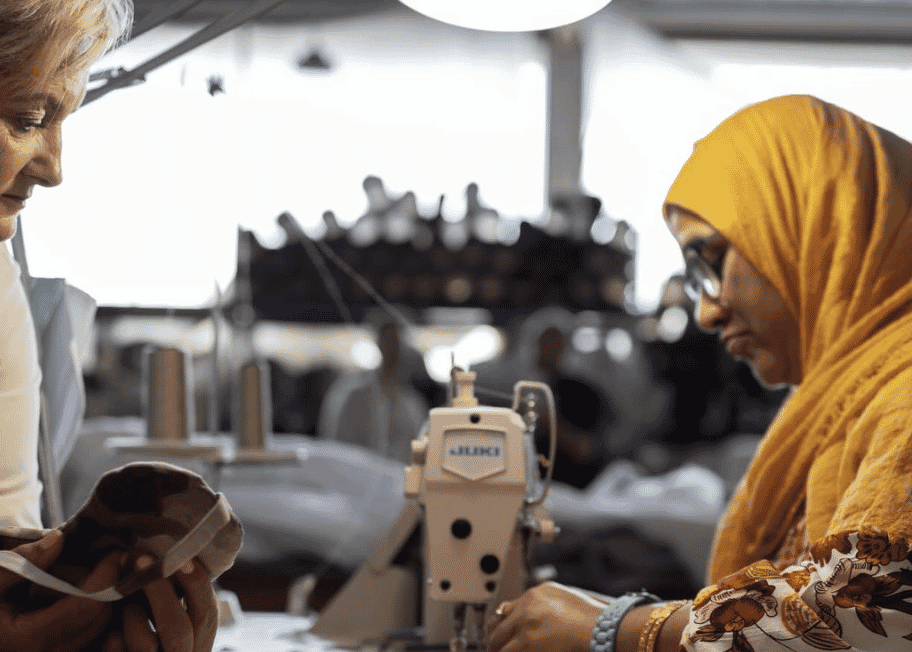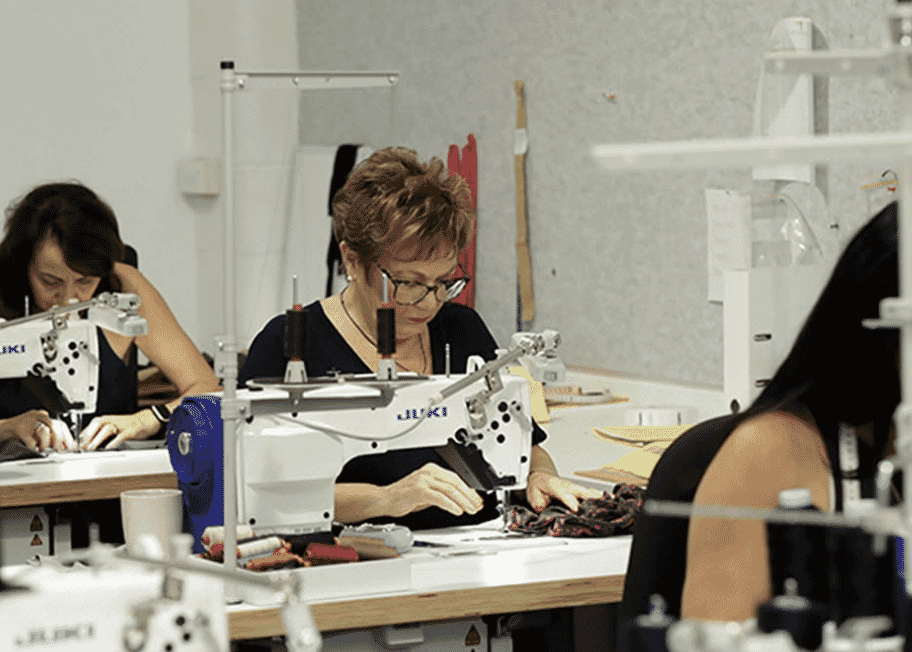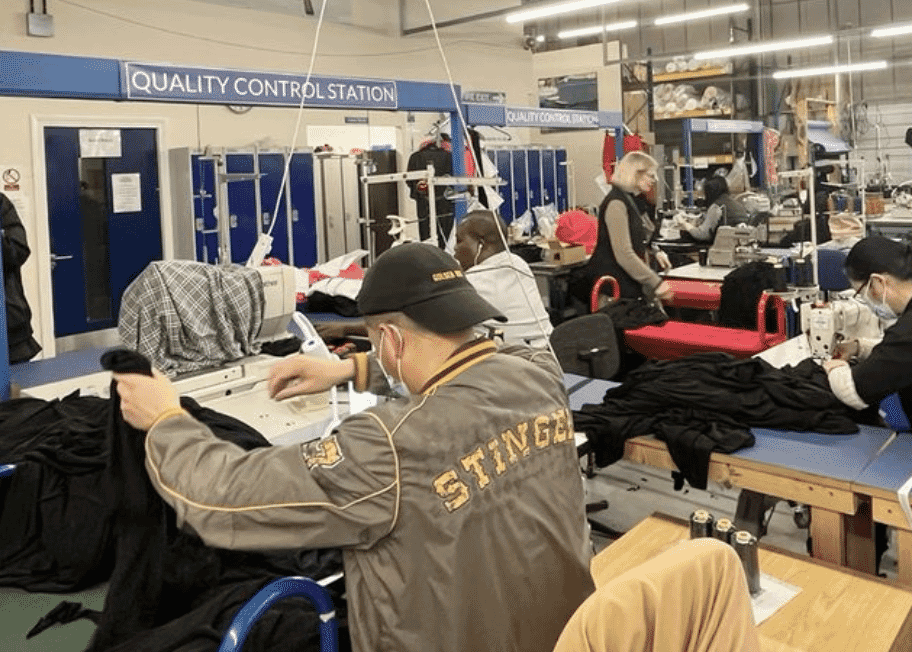
Denizli makes towels the way Champagne makes wine. One city, one product, decades of accumulated loom capacity and finishing knowledge, and almost no marketing in English. It is one of the clusters the wider Turkish textile industry is built on, and if you are buying towels wholesale and have not looked at it, that is usually because nobody told you it existed.
The buying question is more specific than for apparel. Towelling is sold by weight, judged on absorbency and shrinkage, and the difference between a good towel and a poor one is measurable rather than a matter of taste. That makes specification unusually important and unusually easy to get right.
The six Turkish clusters and how they divide are set out in the clothing manufacturers guide. This guide covers what Denizli actually produces, how towelling is specified and priced, what minimums are realistic, how the duty position works, and what separates a mill from a trader in this category.
Note: Turkey Clothing Factory is a group of documented clothing factories in Turkey, producing for brands from 100 units. Ranges in this guide are given as market ranges, not as quotes from a specific factory. Ranges come from published industry sources. We confirm exact MOQ and price with the factory when you send a brief.
Key takeaways
- Denizli is the cluster. Terry towelling and bathrobes, built around one product over decades.
- Towelling is specified by GSM, and that single number drives cost, hand and absorbency more than anything else.
- Cotton type matters here more than in apparel. Long-staple cotton is why premium Turkish towels feel different.
- Minimums run 250 to 500 pieces, set by loom set-up and dye lot rather than by sewing.
- Turkish towels enter the EU duty-free and the UK at zero tariff, against roughly 9 percent plus 12.5 percent under Section 301 into the US.
- Zero twist and combed cotton are different things. Suppliers use both terms loosely and they mean different products.
- The wholesale trade and the mills are separate. Know which you are buying from.
Have a product in mind? Tell us the product, quantity and timeline and our team replies within 24 hours. Send a brief →
Why Does Denizli Dominate Turkish Towelling?
Because it has been doing one thing for a very long time and built the surrounding infrastructure to match. Denizli is the terry towelling and home textile cluster in a country the European Commission records as the EU's fifth largest trading partner (European Commission, 2025). The specialisation is unusually deep even by Turkish cluster standards.
What accumulates in a cluster like that is not just looms. It is dyeing capacity tuned to terry, finishing lines that handle pile without crushing it, technicians who can diagnose a shedding problem, and a local supply of the yarn types the product needs. None of that transfers quickly to a new location.
The practical consequence for a buyer is adjacency. Weaving, dyeing, finishing and making-up sit close together, which is why a Denizli mill can run a 300-piece dye lot without it being an imposition. In a location where finishing is a subcontract two hundred miles away, the same order is awkward.
Does that mean Denizli is always the answer? For terry towelling and bathrobes, usually. For a printed beach towel where the print rather than the pile is the product, the calculation is different and other clusters compete.
Citation Capsule: Denizli is Turkey's terry towelling and home textile cluster, with weaving, dyeing, finishing and making-up concentrated in one location. That adjacency allows smaller dye lots to run economically, which is why minimum order quantities in Turkish towelling sit lower than in origins where finishing is subcontracted at distance.
How Is Towelling Actually Specified?
By weight first, then by cotton, then by construction. Get those three right and the rest is detail. Get the first one wrong and no amount of negotiating will produce a towel your customer likes, because weight is what people feel when they pick one up.
| GSM | Character | Typical use | Dries |
|---|---|---|---|
| 300 to 400 | Light, thin | Gym, travel, beach | Fast |
| 400 to 550 | Standard household weight | Everyday bath towels | Moderate |
| 550 to 700 | Dense, plush | Premium retail, hospitality | Slowly |
| 700 and above | Very heavy, luxurious | Luxury hotel, spa | Slowly, needs airflow |
Market ranges compiled from published industry sources. GSM bands are indicative and mills vary in how they describe the same weight.
Heavier is not automatically better, and this is where brands go wrong. GSM bands are indicative and mills define them differently, but a 700 GSM towel in a humid bathroom with no airflow stays damp and starts to smell, which customers blame on quality. For most household retail, 500 to 600 is the sweet spot between feeling substantial and actually drying.
Cotton type is the second lever. Long-staple cotton produces longer, stronger loops that shed less and last longer. This is the real difference behind premium Turkish towels, more than any finishing process, and it starts at the yarn rather than at the loom.
Construction is the third. Zero twist yarn gives a softer, more absorbent towel that feels luxurious and is less durable. Combed cotton is a different process entirely, removing short fibres before spinning. Suppliers use both terms loosely, so ask which one they actually mean.
Citation Capsule: Terry towelling is specified primarily by GSM weight, then by cotton staple length and construction. Household retail towels typically sit between 500 and 600 GSM, balancing substantial hand against drying time. Long-staple cotton produces longer, stronger loops that shed less, which is the principal difference behind premium Turkish towels.
What Minimum Order Can You Get on Towels?
Roughly 250 to 500 pieces per colour, and the constraint is the dye lot rather than the sewing. Terry is woven then dyed then finished, and each of those steps has a batch size below which the mill is losing money running your order at all.
| Product | Workable MOQ | What sets it |
|---|---|---|
| Plain bath towel, stock colour | 250 to 300 pieces | Dye lot, or none if the colour is in stock |
| Plain bath towel, custom colour | 400 to 500 pieces | Minimum dye batch |
| Bathrobe | 300 to 500 pieces | Dye lot plus making-up |
| Woven-in border or jacquard | 500 to 1,000 pieces | Loom set-up for the pattern |
| Embroidered logo on stock towel | 100 pieces or fewer | Embroidery batch only |
Market ranges compiled from published industry sources, not quotes from any named mill. We confirm exact MOQ and price with the factory when you send a brief.
That last row is the useful one and most buyers do not know it. If you can live with a mill's existing towel and add your own embroidered logo, the minimum collapses, because you are only batching the embroidery. That is how most small hospitality and gym orders are actually made.
Custom colour is the expensive decision. A colour that exists in the mill's range costs you nothing extra and ships faster. A bespoke shade triggers a dye batch, and the difference in minimum can be 200 pieces. If you want a towel made to your own weight, size and colour, our guide to commissioning towels from a Turkish mill covers the brief, the quotation and sample approval.
Citation Capsule: Minimum order quantities in Turkish towelling are set by dye lot rather than sewing capacity, running roughly 250 to 300 pieces for stock colours and 400 to 500 for custom shades. Adding embroidery to a mill's existing towel avoids the dye batch entirely and can reduce the minimum to 100 pieces or fewer.
No tech pack yet? Factories quote from specifications, not from photographs. A factory-ready single-style tech pack is $79: measurements, construction, fabric, trims and labelling in the format a Turkish factory costs from.
What Do Turkish Towels Cost to Land?
Nothing in duty if you are selling in Europe or Britain, and roughly 9 percent if you are selling in America. Turkish goods enter the EU free of duty under the Customs Union with an A.TR movement certificate (European Commission), and the UK applies zero tariff under the agreement in force since 2021 (UK Government).
Towels are classified as made-up textile articles rather than garments, which puts them at a lower ordinary rate than most apparel. For a US importer that is a genuine relief: around 9 percent against the 16.5 percent on a cotton knit tee (USITC). The full duty position by destination covers how classification drives it. Since 24 July 2026 products of Türkiye also pay an additional 12.5 percent under Section 301 on top of the ordinary HTS rate.
The freight economics differ from apparel too. Towels are heavy and bulky for their value, so freight is a larger share of landed cost than it is on garments. That makes the road route to Europe worth more here than in most categories, it makes sea freight to America a bigger drag, and it raises what a forwarder's quotation actually covers.
| Landing in | Duty | Freight weight | Net position |
|---|---|---|---|
| European Union | Zero, with A.TR | Road, days | Strong. Duty and freight both favour Turkey |
| United Kingdom | Zero, origin permitting | Road, days | Strong |
| United States | Roughly 9 percent plus 12.5 percent (Section 301) | Sea, weeks, and towels are bulky | Workable on quality, not on price |
Sources: European Commission Access2Markets; UK Government; USITC Harmonized Tariff Schedule. Rates are indicative and depend on exact classification; US figures are ordinary rates, to which Section 301 adds 12.5 percent.
Citation Capsule: Turkish towels enter the European Union duty-free under the Customs Union with an A.TR movement certificate and the United Kingdom at zero tariff subject to origin. United States importers pay an indicative 9 percent under the USITC Harmonized Tariff Schedule, lower than most apparel because towels classify as made-up textile articles rather than garments, plus an additional 12.5 percent under Section 301 since 24 July 2026.
What About Bathrobes?
Same cluster, different product, and the specification questions change more than buyers expect. A bathrobe is a made-up garment built from towelling, which means it carries both the fabric decisions above and a set of garment decisions that towels never raise.
| Construction | Character | Typical use |
|---|---|---|
| Terry, looped both sides | Heavy, most absorbent | Hotel and spa |
| Velour face, terry back | Smooth outside, absorbent inside | Premium retail |
| Waffle weave | Light, dries fast, packs small | Boutique hotel, travel |
| Shawl versus kimono collar | Shawl reads traditional, kimono lighter | Both, by positioning |
Market ranges compiled from published industry sources. Constructions are described as mills commonly use the terms, which varies.
Weight matters differently in a robe. A 500 GSM towel is comfortable; a 500 GSM robe is heavy to wear and slow to dry on a hook. Most retail robes sit lighter than the towels sold beside them, which surprises brands building a coordinated set.
Sizing is the practical trap. Robes are usually sold in two or three sizes covering a wide range of bodies, and getting the grading wrong produces returns that a towel never generates. Ask for the size chart before sampling rather than after.
Minimums land higher than towels because making-up is added to the dye lot, typically 300 to 500 pieces. Waffle robes sometimes run lower, since the fabric is more often held in stock.
Citation Capsule: Bathrobes combine towelling fabric decisions with garment decisions that towels do not raise, including collar style and size grading. Retail robes generally sit at lower GSM than the towels sold alongside them, because a heavy robe is uncomfortable to wear and slow to dry. Minimums typically run 300 to 500 pieces as making-up is added to the dye lot.
Are You Buying From a Mill or a Trader?
The same question as in apparel fabric, with one extra tell that works only in this category. A towelling mill owns looms, and a mill will talk about loom width, pile height and dye capacity without prompting. A trader talks about price and delivery.
Ask what loom width they run. It is a mundane technical question with a specific answer, and it determines which towel sizes are efficient for them. A trader generally cannot answer it and a mill answers immediately.
Ask about their dye capacity and minimum batch. A mill knows its own batch economics precisely. A trader quotes a number it was given.
Ask to see the OEKO-TEX certificate number. Towelling sits against skin and OEKO-TEX is near-standard in this category, so a supplier without one is unusual. Check the number in the issuing database rather than accepting a PDF, and note whose name is on it. A trader presenting a mill's certificate is telling you something.
The wider distinction between factories and traders applies here too. Neither answer disqualifies anyone. Traders in this category consolidate across mills and that is useful if you want towels, bathrobes and bed linen on one invoice. You simply want to know which conversation you are in.
Citation Capsule: A towelling mill can state its loom width, pile height and minimum dye batch without preparation, while a trading company generally quotes figures it was given. OEKO-TEX certification is near-standard in Turkish towelling because the product sits against skin, and certificate numbers should be verified in the issuing database with attention to whose name appears on them.
What to specify on a towel brief
- GSM, and be realistic. 500 to 600 for household retail
- Cotton type: long-staple, combed or standard, stated explicitly
- Construction: zero twist or conventional. They are different products
- Size and hem style, which affect loom efficiency and cost
- Colour: stock shade or custom, because it moves the minimum by 200 pieces
- OEKO-TEX certificate number, checked in the database
Towelling is one of the few categories where the specification is genuinely objective. Weight, staple and twist are measurable, so a good brief removes almost all the ambiguity before sampling.
Skip the search: the Turkey factory directory ($49) lists documented factories by category, city and capability, with the verification status of each. One-time payment, instant download.
How Do You Judge a Towel Sample?
Four tests, none of them needing equipment, and together they take about a day of elapsed time rather than an hour of work. Towelling faults are physical rather than aesthetic, which means a sample tells you far more in this category than a garment sample usually does. The catch is that you have to wash it first, and most buyers assess the towel that arrives rather than the towel their customer will actually own.
Wash it three times before judging anything. Towels change substantially on first wash: they soften, they shrink, and poor ones shed heavily. A sample judged straight off the loom tells you almost nothing about what your customer will own.
Measure shrinkage. Some is normal and expected, particularly in the length. Excessive shrinkage usually means the fabric was stretched during finishing to hit a weight target, which is a specification problem you can raise.
Check absorbency by floating it. A good towel sinks and absorbs quickly. One that sits on the surface has residual finishing chemistry on it, which typically washes out but should not be there in a sample.
Look for shedding after the washes. Loose lint in the machine filter indicates short-staple cotton or loops cut during finishing. This is the fault customers notice most and complain about loudest.
Citation Capsule: Towel samples should be washed three times before assessment, because terry changes substantially on first wash through softening, shrinkage and shedding. The four practical checks are dimensional shrinkage, absorbency tested by floating, lint shedding after washing, and hand feel once the finishing chemistry has been removed.
Four sample checks, in this order
- Wash three times before judging anything at all
- Measure shrinkage, especially in the length. Excess usually means the fabric was stretched to hit a weight
- Float it. A good towel sinks and absorbs. One that floats has finishing chemistry on it
- Check the machine filter for lint. Shedding means short staple or loops cut in finishing
Terry is one of the few products where the sample you receive and the product your customer owns are genuinely different objects. Judge the washed one.
Buying Turkish Towels Wholesale
Specify the weight first and be honest about where the towel will live. A 700 GSM towel is a wonderful object in a warm dry bathroom and a complaint in a small damp one, and the difference is your customer's experience rather than the mill's quality.
Then decide on colour, because that single choice moves your minimum by a couple of hundred pieces. And if the order is small, ask whether embroidery on a stock towel gets you what you actually need.
Finally, wash the sample three times before you approve anything. Terry is one of the few products where the sample you receive and the product your customer owns are genuinely different objects.
Frequently Asked Questions
What GSM should a good bath towel be?
Between 500 and 600 GSM for household retail, which balances a substantial hand against drying time. Lighter towels from 300 to 400 GSM suit gym and beach use because they dry fast. Above 700 GSM the towel feels luxurious but stays damp in bathrooms without good airflow.
What is the minimum order for towels from Turkey?
Roughly 250 to 300 pieces in a stock colour and 400 to 500 in a custom shade, because the dye lot rather than the sewing sets the floor. Adding embroidery to a mill's existing towel avoids the dye batch and can bring the minimum to 100 pieces or fewer.
Why are Turkish towels considered better?
Principally long-staple cotton, which produces longer and stronger loops that shed less and last longer, combined with the Denizli cluster's accumulated weaving, dyeing and finishing capability. The difference is in the yarn and the finishing rather than in any single process.
Do I pay duty on towels imported from Turkey?
Into the European Union, no, under the Customs Union with an A.TR movement certificate. Into the United Kingdom, no, under the 2021 agreement subject to origin. Into the United States, an indicative 9 percent under the USITC Harmonized Tariff Schedule, lower than apparel because towels classify as made-up textile articles, plus an additional 12.5 percent under Section 301 since 24 July 2026.
What is zero twist towelling?
Yarn spun with minimal twist, producing a softer and more absorbent towel that feels notably luxurious and is less durable than conventional twist. It is a different thing from combed cotton, which removes short fibres before spinning. Suppliers use both terms loosely, so confirm which is meant.
Send the GSM, the piece count by colour, and where the goods are landing. We place the brief with the mill in our group built for that product, normally within 24 hours. You work directly with the mill and the mill bills you directly. No commissions. No markups. The factory bills you directly.
Get in contact Download the directory ($49)Need a tech pack? Get a factory-ready single-style tech pack for $79. See what's included.
Editorial note: all company names, certification marks and trademarks referenced here are the property of their respective owners. MOQ, cost and lead-time figures are market ranges compiled from the published sources listed below, not quotes from any individual factory, and they vary by product, fabric and season. Tariff figures were correct at the date of publication and the position continues to move. Always verify your own HTS classification and confirm terms directly with the factory before committing.
Sources
- Sheng Lu, FASH455, University of Delaware (2025): WTO-based analysis of global textile and apparel trade.
- US Census Bureau: Trade in Goods with Turkey, the official monthly import and export series.
- European Commission, Access2Markets: the EU-Turkey Customs Union and what it covers.
- European Commission, Taxation and Customs Union (2024): electronic A.TR movement certificate rules.
- Irish Revenue: Turkey Customs Union and preferential origin, including A.TR and EUR1 treatment.
- Istanbul Apparel Exporters Association: Turkish apparel export sector profile and membership.
- Global Organic Textile Standard: public database of GOTS-certified suppliers.
- Textile Exchange: certified company finder for recycled content and responsible fibre standards.
- OEKO-TEX Label Check: public verification of certificate numbers.
- amfori BSCI: social audit system documentation.
- USITC Harmonized Tariff Schedule: the current classification schedule and duty rates.
- Office of the US Trade Representative (July 2026): fact sheet on the Section 301 action, which adds 12.5 percent to US duty on products of Türkiye entered from 24 July 2026 (HTS heading 9903.05.79).
- US Customs and Border Protection: tips for new importers, including importer-of-record responsibility.
- European Commission, Directorate-General for Trade (2025): EU trade relations with Turkey, including bilateral trade values and partner ranking.
- UK Government: summary of the UK-Turkey trade agreement, in force since 1 January 2021.