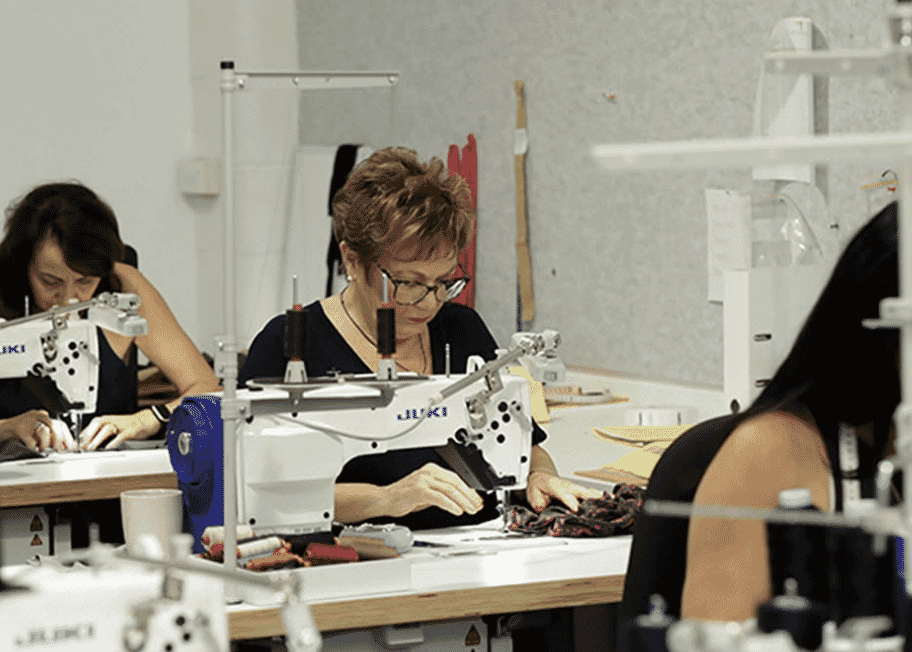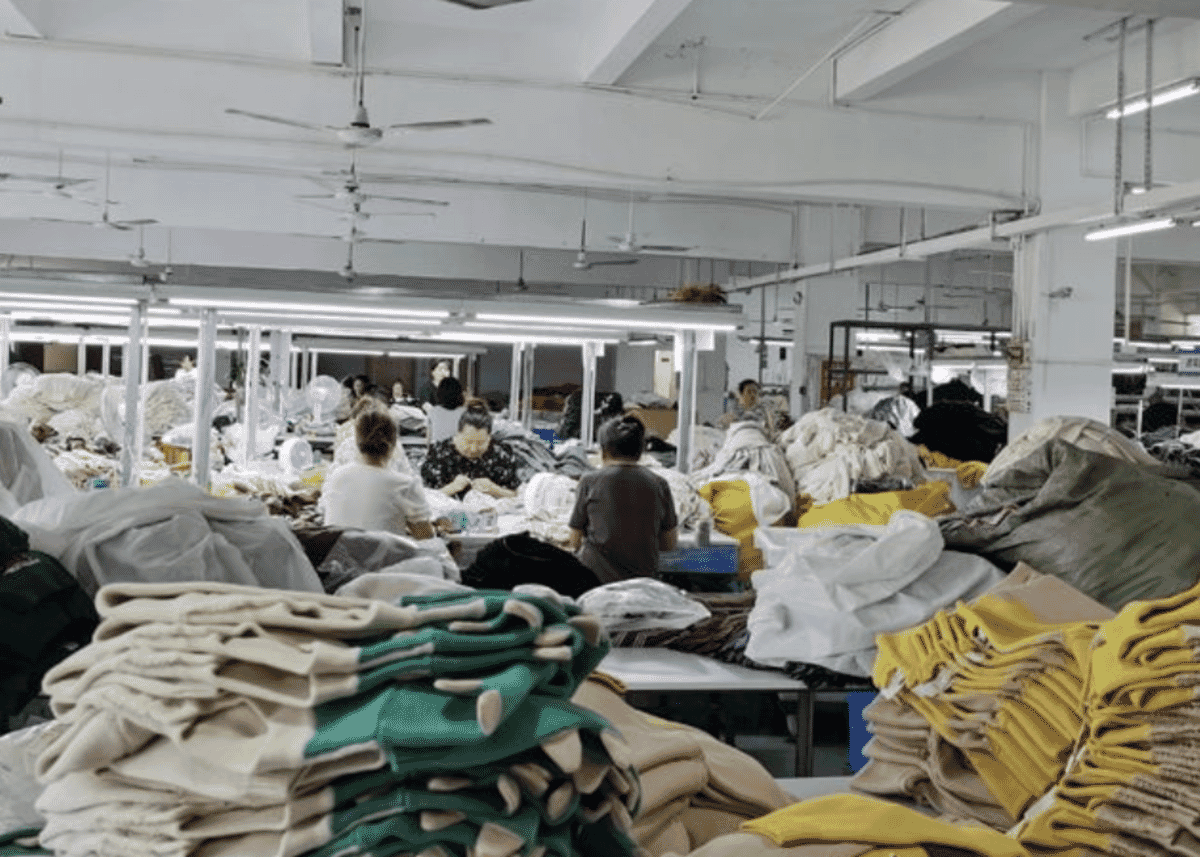
Buying wholesale from Turkey used to mean flying to Istanbul, walking Merter, Osmanbey and Laleli with a notebook, and arranging your own freight home. Much of that trade can now be done online, and a retailer in Manchester or Kuala Lumpur can place a test order without leaving the office.
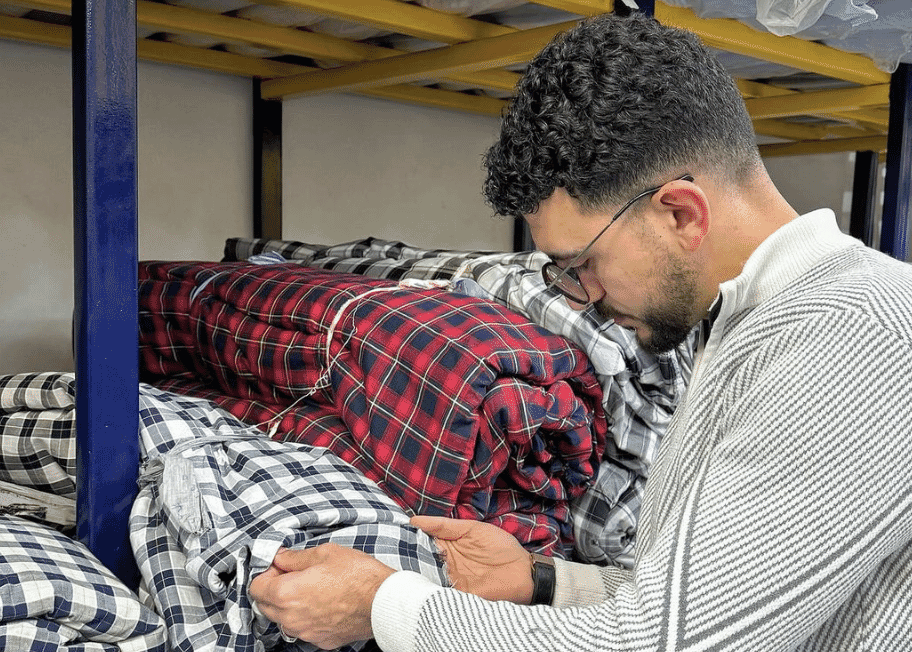
What has not changed is what you give up by buying remotely. Photographs flatter garments, fabric hand does not transmit through a screen, and the single most useful thing about a showroom is the twenty seconds you spend touching something before deciding.
The markets themselves are covered in the wholesale clothing guide. This guide covers how Turkish online wholesale actually works, what the platforms do and do not handle, how payment and shipping are arranged, where remote buying goes wrong, and when it beats a buying trip.
Note: Turkey Clothing Factory is a group of documented clothing factories in Turkey, producing for brands from 100 units. Ranges in this guide are given as market ranges, not as quotes from a specific factory. We confirm exact MOQ and price with the factory when you send a brief.
Key takeaways
- Most platforms are marketplaces, not retailers. You are buying from the showroom, not the site.
- Minimums are genuinely low. Single pieces for sampling are common.
- Shipping is usually yours to arrange, and platforms vary widely on this.
- Fabric hand is what you lose. In drape-led categories that is most of the product.
- Ask for the A.TR even online. Many sellers have never been asked.
- Sample first, always. The cost of a wrong bulk order dwarfs the cost of three samples.
- Online suits testing and repeats. A trip still wins for a first serious buy.
Have a product in mind? Tell us the product, quantity and timeline and our team replies within 24 hours. Send a brief →
How Does Turkish Online Wholesale Work?
Mostly as a marketplace listing the same Istanbul showrooms that have always existed, rather than as a retailer holding its own stock. That distinction decides who you are actually contracting with, who answers when something is wrong, and whether the site can help you at all.
| Model | Who you buy from | Who handles problems | Typical minimum |
|---|---|---|---|
| Marketplace | The showroom listing the product | The seller, with platform mediation | Set by each seller |
| Platform holding stock | The platform itself | The platform | Often lower, sometimes single pieces |
| Showroom's own site | That showroom directly | That showroom | Their normal wholesale terms |
| Social selling | Whoever runs the account | Nobody, structurally | Negotiable and unprotected |
Based on common platform terms and market practice. Individual platforms combine these models and terms change.
The last row deserves a warning. A great deal of Turkish wholesale is transacted through social media accounts, and those transactions carry no dispute mechanism whatsoever. That does not make them fraudulent, and it does mean a first order placed that way is entirely dependent on goodwill.
Citation Capsule: Turkish online wholesale operates mainly as marketplaces listing goods from existing Istanbul showrooms rather than as retailers holding stock. The contracting party is usually the listing showroom rather than the platform, which determines who resolves disputes. Social media selling carries no dispute mechanism at all.

What Do You Give Up Buying Remotely?
Fabric hand, drape and the ability to reject something in two seconds. Those three things are what a showroom visit actually buys, and no product photography solves any of them. In categories where the cloth is the product, that is a significant loss rather than a minor inconvenience.
Hand does not photograph. Whether a jersey feels substantial or thin, whether a crepe is crisp or limp, whether a towel is dense or airy. Every one of those decides sell-through and none is visible on a screen.
Drape is worse. A long garment photographed flat or on a mannequin tells you almost nothing about how it falls on a moving body, which in modest wear and occasion wear is most of the purchase decision. The abaya wholesale guide covers what to check on drape, fabric weight and length before a first order.
Colour is unreliable. Screen calibration, studio lighting and seasonal editing mean the shade you order is frequently not the shade that arrives. Sellers are not usually manipulating this, and it happens anyway.
| Property | Transmits online? | Consequence if wrong |
|---|---|---|
| Style and silhouette | Yes | Rarely a surprise |
| Price and range | Yes | Comparable to a showroom |
| Colour | Partly | Stock that does not match the listing photo |
| Fabric hand | No | Thin-feeling goods that do not sell |
| Drape on a body | No | Returns, in modest and occasion wear |
Directional assessment of what product photography conveys. Consequences are typical rather than universal.
What you do not lose is price or range. Online listings are generally the same goods at similar wholesale terms, and the breadth available is often wider than any one showroom visit covers.
Citation Capsule: Remote wholesale buying from Turkey sacrifices assessment of fabric hand, drape on a moving body, and colour accuracy, none of which transmit reliably through product photography. Price and range are generally comparable to showroom buying, and online breadth frequently exceeds what a single buying trip covers.
How Does Payment Work?
Bank transfer for most transactions, card on the larger platforms, and the difference matters more than the convenience suggests. A bank transfer to a Turkish account is fast, cheap and offers you essentially no recourse if the goods never arrive.
Platform-held payment is worth paying for on a first order. Where a site holds funds until delivery is confirmed, you have a mechanism. Where you transfer directly to the seller, you have a relationship and nothing else.
Card payment gives you chargeback rights that a transfer does not, which is a meaningful protection on a first transaction with an unknown supplier and usually costs a small processing fee.
Deposits are normal on larger orders and unsecured. The same logic applies as in manufacturing: the deposit is your exposure, and checking the company exists is the main control available.
None of this suggests Turkish wholesale is risky. It suggests that a first order placed by bank transfer to a supplier you found on social media is a different proposition from the same order placed through a platform with dispute resolution.
Citation Capsule: Turkish online wholesale is transacted mainly by bank transfer, with card payment and platform-held funds available on larger sites. Bank transfers offer no recourse if goods fail to arrive, while platform escrow and card chargeback rights provide dispute mechanisms that are worth the additional cost on a first order.
Before a first remote order
- Establish who you are contracting with: the platform or the listing showroom
- Use a payment method with recourse on the first transaction
- Sample before bulk, always. Three samples cost less than one wrong order
- Ask where the goods were made, because showrooms carry imported stock too
- Ask about the A.TR if you are landing in the EU
- Confirm who arranges shipping and whether a forwarder is needed
Most of these are one-line questions. The sellers who answer them readily are the ones worth building a relationship with, and the question itself does some of the filtering for you.
Skip the search: the Turkey factory directory ($49) lists documented factories by category, city and capability, with the verification status of each. One-time payment, instant download.
Who Arranges the Shipping?
You do, in most cases, and this is the single most common surprise for first-time remote buyers. Platforms list goods; they rarely move them. A seller will pack your order, hold it for collection, and expect somebody you appointed to turn up.
For small orders a courier is simplest. One or two cartons to a European address arrives in two to four days with customs entry included in the service, and no forwarder is required.
Above a pallet, a forwarder earns its fee. Groupage consolidates partial loads onto trailers running the European corridor continuously, with transit of three to seven days.
Some platforms now offer consolidated shipping, holding orders from several sellers and shipping them together. That is genuinely useful when you are buying across multiple showrooms, and the terms vary considerably between sites.
Arrange the freight before you order rather than after. A seller holding your goods for three weeks while you find a forwarder is a relationship problem you created.
Citation Capsule: Turkish wholesale platforms list goods but rarely arrange freight, so buyers appoint their own courier or forwarder. Couriers suit one or two cartons to a European address with customs entry included, while groupage forwarding suits anything above a pallet with three to seven day road transit.
Does Buying Online Change the Duty Position?
No, and buyers frequently assume it does. Goods bought online from a Turkish seller enter the European Union duty-free under the Customs Union exactly as showroom purchases do, provided an A.TR movement certificate accompanies them (European Commission). The channel is irrelevant to customs.
What changes is who remembers to arrange it. A showroom dealing with export buyers weekly issues A.TR certificates as routine. A small seller taking a first international order through a platform may never have been asked.
For UK buyers the origin question is sharper online. You cannot see whether stock is Turkish or imported, and the rules of origin test what was made rather than what was sold (UK Government). Ask explicitly per style.
Get the answer in writing on the order, not in chat. A message thread is not a document your broker can file, and origin confirmed verbally becomes origin nobody can evidence when a customs authority asks six months later. A line on the invoice costs the seller nothing.
The declared value has to match what you paid. Sellers occasionally offer to under-declare on small consignments as a courtesy. It is the buyer who carries that at their own border, not the seller, and a valuation query holds the goods while it is resolved.
Consolidating across sellers changes the paperwork. Three showrooms shipping into one consolidated load means three invoices behind one entry, and every one of them needs to agree with the packing list. That reconciliation is the cargo agent's job and it is worth confirming they are doing it rather than assuming.
Low-value thresholds are no shortcut. The EU has abolished customs duty relief for parcels under €150, with an interim flat duty on small parcels sent to consumers from 1 July 2026 (Council of the EU). Check your own market's current rules rather than assuming a small test order needs less documentation.
Citation Capsule: The purchase channel does not affect customs treatment: goods bought online from Turkish sellers enter the European Union duty-free under the Customs Union with an A.TR certificate, as showroom purchases do. Smaller online sellers may be unfamiliar with issuing the certificate, and United Kingdom buyers must confirm origin per style since stock cannot be inspected.
Where Does Remote Buying Go Wrong?
Five ways, and four are avoidable with a sample. The pattern across all of them is the same: something that would have taken two seconds to catch in a showroom instead arrives in a carton three weeks later, by which point it is a bulk quantity.
| Problem | Why it happens | How to avoid it |
|---|---|---|
| Fabric feels thinner than expected | Hand does not photograph | Sample first |
| Colour differs from the listing | Screen and studio lighting | Sample, and reorder from the same lot |
| Sizing does not match your market | Size charts follow each seller's own fit | Get the chart in centimetres |
| Goods held at customs | No A.TR, or documents disagree | Ask before ordering |
| Seller unreachable after payment | Direct transfer, no platform | Use a payment method with recourse |
Based on common market practice and platform dispute terms. Frequency varies considerably by platform and seller.
Reordering from a different lot is the subtle one. A style that sold well is reordered, arrives in a slightly different shade, and a customer who owns both notices. Stock lots differ, and the fix is asking whether the seller still holds the original lot rather than assuming.
Citation Capsule: Remote wholesale buying from Turkey fails most often through fabric weight differing from expectation, colour varying from listing photography, sizing mismatches, missing A.TR documentation at customs, and unreachable sellers after direct bank transfer. Four of the five are preventable by sampling before committing to bulk.
When Should You Still Travel?
For a first serious buy, for drape-led categories, and whenever you are choosing a supplier rather than simply choosing a product. Online has genuinely taken over the testing and the repeat ordering, and it has not replaced the part of the process where you work out who you actually want to deal with over several seasons.
A first serious commitment deserves a trip. Walking three showrooms tells you more about a supplier in an afternoon than six months of correspondence will, including things nobody would put in writing.
Drape-led product needs hands. Modest wear, occasion wear, anything where the cloth falls rather than fits. Photographs are least reliable exactly where the purchase decision is most sensitive.
Multi-showroom buying benefits from consolidation on the ground. Selecting across five showrooms over two days and shipping the whole lot once is considerably more efficient than five separate remote transactions, five separate payments and five separate collections, each with its own opportunity to go wrong.
There is a relationship argument too, and it is not sentimental. Suppliers who have met you tend to answer faster, flag stock issues before you ask, and hold a lot for you when a repeat is coming. None of that appears in any listing.
What does not need a trip: repeat orders of proven styles, testing whether a category suits your customer, and topping up a range between seasons. Those are exactly what online does well.
Five ways remote orders fail
- Fabric thinner than expected. Hand does not photograph. Sample first
- Colour differs from the listing. Screen and studio lighting. Sample, and reorder from the same lot
- Sizing does not match your market. Get the chart in centimetres
- Goods held at customs. No A.TR, or documents disagree
- Seller unreachable after payment. Direct transfer with no platform behind it
Four of the five are solved by ordering samples before bulk. Three samples cost less than one wrong order of three hundred pieces.
Buying From Turkish Wholesale Markets Online
Establish who you are actually contracting with before you pay anybody anything. The platform and the showroom are usually different companies with different obligations, and knowing which of them owes you a remedy when something arrives wrong is worth considerably more than any amount of detail in a product listing.
Sample before bulk without exception. The three things that do not survive the journey to a screen are hand, drape and colour, and all three are the things that decide whether stock sells.
And ask about the A.TR even on a small order. The certificate costs nothing and a seller who has never issued one is better discovering that now than when your consignment is sitting at a border.
Start with one seller rather than five. A first remote order is a test of the seller as much as the stock, and spreading it across several makes the result unreadable. One relationship that works is worth more than five that half-worked.
Keep every reference. Style codes, the company's registered name and the date you bought are what make a reorder possible, and remote buying removes the one thing that used to substitute for records, which was having walked the building and remembered the stand.
Online buying is a supplement, not a replacement. It works well for repeat purchases from sellers you already know, and poorly as a way to discover a market from scratch. The wholesale route in full assumes you have calibrated somewhere, and a screen is a poor place to do it.
Frequently Asked Questions
Can I buy wholesale from Turkey without travelling?
Yes. Online wholesale platforms list goods from Istanbul showrooms with minimums that are often very low, including single pieces for sampling. What you give up is the ability to assess fabric hand, drape and colour accuracy, which is why sampling before bulk matters.
Who am I actually buying from on a Turkish wholesale platform?
Usually the showroom listing the product rather than the platform itself, which operates as a marketplace. That determines who resolves problems. Some platforms hold their own stock and contract with you directly, and terms differ, so confirm before ordering.
How do I pay a Turkish wholesale supplier?
Bank transfer is most common, with card payment and platform-held funds available on larger sites. Transfers offer no recourse if goods fail to arrive, so a payment method with a dispute mechanism is worth the small extra cost on a first order.
Does the platform arrange shipping?
Usually not. Most list goods and expect you to appoint a courier or freight forwarder. Couriers suit one or two cartons to a European address. Above a pallet, groupage forwarding is more economical. Some platforms now offer consolidated shipping across sellers.
Do I still get duty-free entry buying online?
Yes. The purchase channel does not affect customs treatment, so goods enter the European Union duty-free under the Customs Union with an A.TR certificate. Smaller online sellers may never have been asked to issue one, so raise it before ordering.
If you have a style that sells and want it made to your own specification, send the product, the quantity by colourway and where the goods are landing. We place your production with the factory in our group built for that product, normally within 24 hours. No commissions. No markups. The factory bills you directly.
Get in contact Download the directory ($49)Need a tech pack? Get a factory-ready single-style tech pack for $79. See what's included.
Editorial note: all company names, certification marks and trademarks referenced here are the property of their respective owners. Minimum, cost and transit figures are indicative market ranges, not quotes from any individual seller or factory, and they vary by product, fabric and season. Customs positions continue to move. Always verify your own classification and confirm terms directly with the seller before committing.
Sources
- Sheng Lu, FASH455, University of Delaware (2025): WTO-based analysis of global textile and apparel trade.
- US Census Bureau: Trade in Goods with Turkey, the official monthly import and export series.
- European Commission, Access2Markets: the EU-Turkey Customs Union and what it covers.
- European Commission, Taxation and Customs Union (2024): electronic A.TR movement certificate rules.
- Irish Revenue: Turkey Customs Union and preferential origin, including A.TR and EUR1 treatment.
- Istanbul Apparel Exporters Association: Turkish apparel export sector profile and membership.
- Global Organic Textile Standard: public database of GOTS-certified suppliers.
- Textile Exchange: certified company finder for recycled content and responsible fibre standards.
- OEKO-TEX Label Check: public verification of certificate numbers.
- amfori BSCI: social audit system documentation.
- USITC Harmonized Tariff Schedule: the current classification schedule and duty rates.
- US Customs and Border Protection: tips for new importers, including importer-of-record responsibility.
- UK Government: summary of the UK-Turkey trade agreement, in force since 1 January 2021.
- Council of the EU (2026): new customs duty rules for small parcels.