Textile manufacturing and garment manufacturing are separate industries that happen to share customers. In Turkey the distinction is unusually sharp: the company spinning your yarn, the mill knitting it, the dyehouse colouring it and the factory sewing it are often four separate businesses, sometimes in different cities, and understanding that chain explains most of the lead times and minimums you will be quoted.
Brands that treat it as one supplier get surprised repeatedly. The factory cannot explain the yarn delay because the factory did not order the yarn. The mill cannot fix the shade because the mill does not dye.
Buying cloth as a product is covered in the fabric manufacturers guide, and the wider sector picture in the manufacturing overview. This guide covers the four stages of the Turkish textile chain, who does what at each, where the bottlenecks sit, how vertical integration changes the answer, and what any of it means for a buyer placing an order.
Note: Turkey Clothing Factory is a group of documented clothing factories in Turkey, producing for brands from 100 units. Ranges in this guide are indicative market ranges, not quotes from a specific factory. We confirm exact MOQ and price with the factory when you send a brief.
Key takeaways
- Four stages: spinning, knitting or weaving, dyeing and finishing, then making-up. Frequently four companies.
- Every stage has its own minimum, and the largest one upstream governs your order.
- Dyeing is often the bottleneck, more often than spinning or sewing.
- Vertically integrated mills exist and they solve the coordination problem at a price.
- Turkey's chain is geographically short, which is one reason smaller runs work here.
- Ask which stages a supplier owns. The answer predicts what they can and cannot fix.
- The sector is contracting, so chain continuity matters as much as any single supplier.
Have a product in mind? Tell us the product, quantity and timeline and our team replies within 24 hours. Send a brief →
What Are the Stages of the Textile Chain?
Four, and each is a distinct industrial process with its own machinery, economics and minimum. A garment brand touches the last one and inherits the constraints of the first three, which is why quoted minimums so often seem disconnected from how many garments you want. Indicative market ranges put sewing from around 100 pieces against fabric minimums that are often far higher. Knitted categories such as sock production skip the fabric stage entirely and inherit a yarn minimum instead.
| Stage | What happens | Typical minimum | Where in Turkey |
|---|---|---|---|
| 1. Spinning | Fibre becomes yarn | Large. Tonnes, not kilos | Gaziantep, Aegean |
| 2. Knitting or weaving | Yarn becomes cloth | 500 to 1,000 metres | Izmir for knit, Bursa for woven |
| 3. Dyeing and finishing | Cloth gets colour and hand | The dye lot. Often the binding one | Near the mills; Corlu and Tekirdag for denim finishing |
| 4. Making-up | Cloth becomes garments | 100 pieces and up | Istanbul and the garment clusters |
Indicative market ranges, not quotes. Minimums vary substantially by product, fibre and mill.
Read that minimum column downwards and the whole MOQ conversation makes sense. The sewing floor will run 100 pieces happily. The dyehouse will not run 40 kilos of one colour. When a factory quotes 1,000, it is usually passing on a constraint from stage two or three rather than stating its own.
Citation Capsule: The Turkish textile chain runs through four distinct stages: spinning fibre into yarn, knitting or weaving yarn into cloth, dyeing and finishing, and making-up into garments. Each stage carries its own minimum order quantity, and the binding constraint on a garment order is usually the dye lot rather than the sewing capacity.
Where Does the Chain Actually Get Stuck?
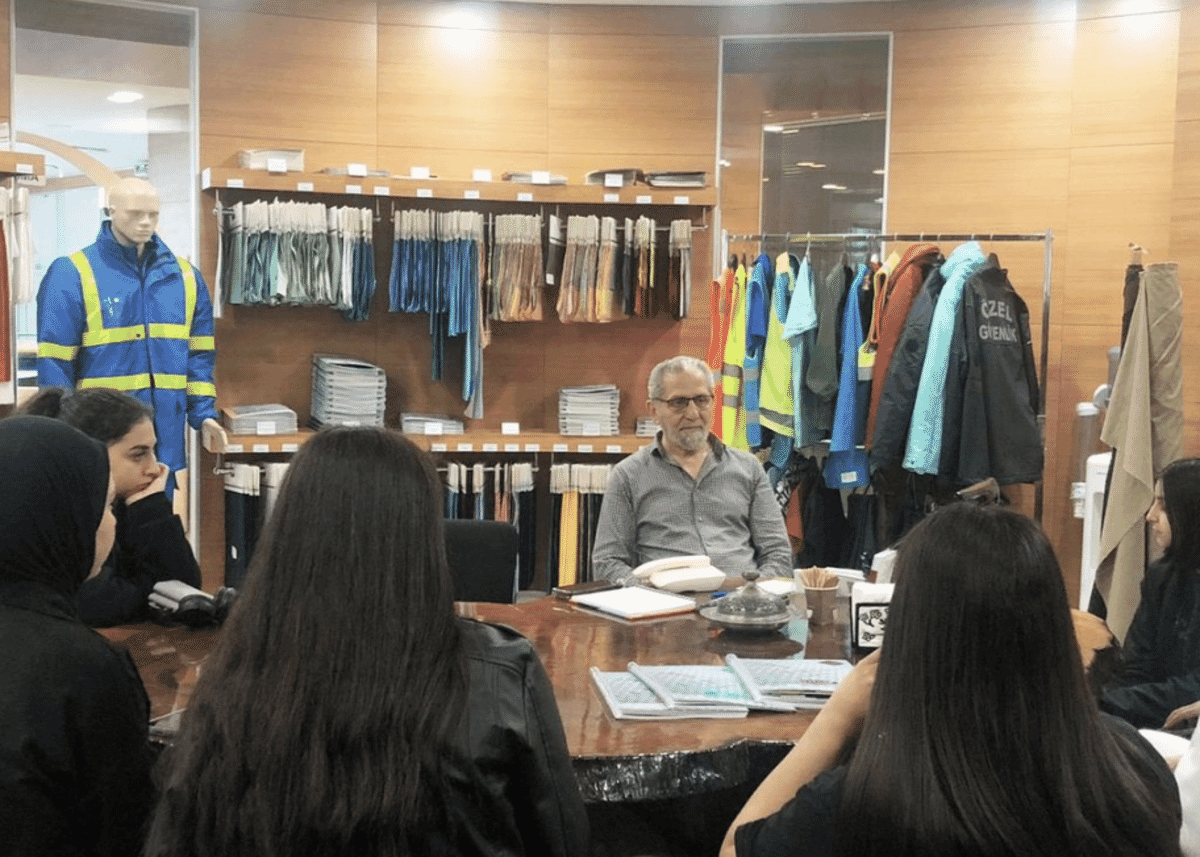
Often at dyeing, and this surprises brands who assume the sewing is the slow part. Dyehouses run batches, batches need to fill, and a small order waits for a compatible colour to be scheduled. The machinery is expensive and running it half empty is not viable.
The dye lot is a scheduling problem, not a capacity problem. A dyehouse with free machines may still not run your 300 metres today, because it is waiting to combine your shade with others. That is why an unusual colour costs more and takes longer than a common one.
Spinning rarely blocks a garment order because yarn is largely a commodity held in stock. It becomes a constraint only for certified, unusual or specific-count yarns, which is exactly why organic cotton minimums sit higher.
Finishing can block quietly. A peached, brushed or enzyme-washed cloth passes through an extra facility, and if that facility is a subcontractor the mill does not control its schedule.
The practical instruction is to ask where the cloth goes between the loom and the cutting table. Every additional facility is a handover, a transport leg and a point where the schedule can slip without anyone lying to you.
Citation Capsule: The dyeing stage is a common bottleneck in Turkish textile production because dyehouses run scheduled batches that must fill before processing, making small or unusual-colour orders wait. Spinning rarely blocks garment orders since yarn is typically held in stock, except for certified or unusual counts.
What Does Vertical Integration Change?
Coordination, mainly, and at a price. A vertically integrated Turkish mill running spinning through to making-up under one roof removes the handovers, controls the schedule end to end and can usually quote a shorter lead time. It will rarely be the cheapest quote you receive.
| Vertically integrated | Separate specialists | |
|---|---|---|
| Lead time | Shorter and more predictable | Longer, with handover risk |
| Unit price | Higher | Lower if you coordinate well |
| Accountability | One company for every fault | Disputes between stages |
| Flexibility on spec | Limited to what they run | Wider, since you can choose each stage |
| Minimums | Often higher | Sometimes lower on stock cloth |
| Suits | Repeating programmes, first-time buyers | Experienced buyers, unusual specifications |
Structural comparison based on common industry practice. Individual mills vary widely within both models.
Integration is claimed more often than it is held. The specific question is which stages happen under the company's own roof and which are bought, and it is answered in one sentence by a business that owns them. A company describing itself as integrated while subcontracting dyeing has a coordination advantage over a pure cut-and-sew factory and not the accountability one.
Partial integration is the common case. Knitting and making-up under one roof with dyeing bought in is a frequent Turkish structure, and it is a genuinely useful one: the two stages that most often disagree about fabric faults are the two that sit together.
Where it matters most is a fault nobody owns. A garment that pills after three washes is a yarn problem, a knitting problem or a finishing problem, and in a separated chain each stage can reasonably point at another. One company covering all three cannot.
Where it matters least is a simple repeat order in stock cloth. Nothing is being coordinated, no handover exists to fail, and the integrated mill's higher price buys you an advantage the order does not need.
The accountability row is the one that decides it for most first orders. When a garment comes back with a shade variation, an integrated mill owns the problem. Across four companies, the dyehouse blames the mill, the mill blames the yarn, and you are the only person with an interest in resolving it.
Integrated mills also solve a problem specific to a contracting market: fewer counterparties means fewer chances that one of them stops trading mid-order.
Citation Capsule: Vertically integrated Turkish mills covering spinning through making-up offer shorter and more predictable lead times with single-point accountability, typically at a higher unit price and with less flexibility on specification. Separate specialists can be cheaper where the buyer coordinates well, at the cost of disputes falling between stages.
What Should You Ask a Textile Supplier?
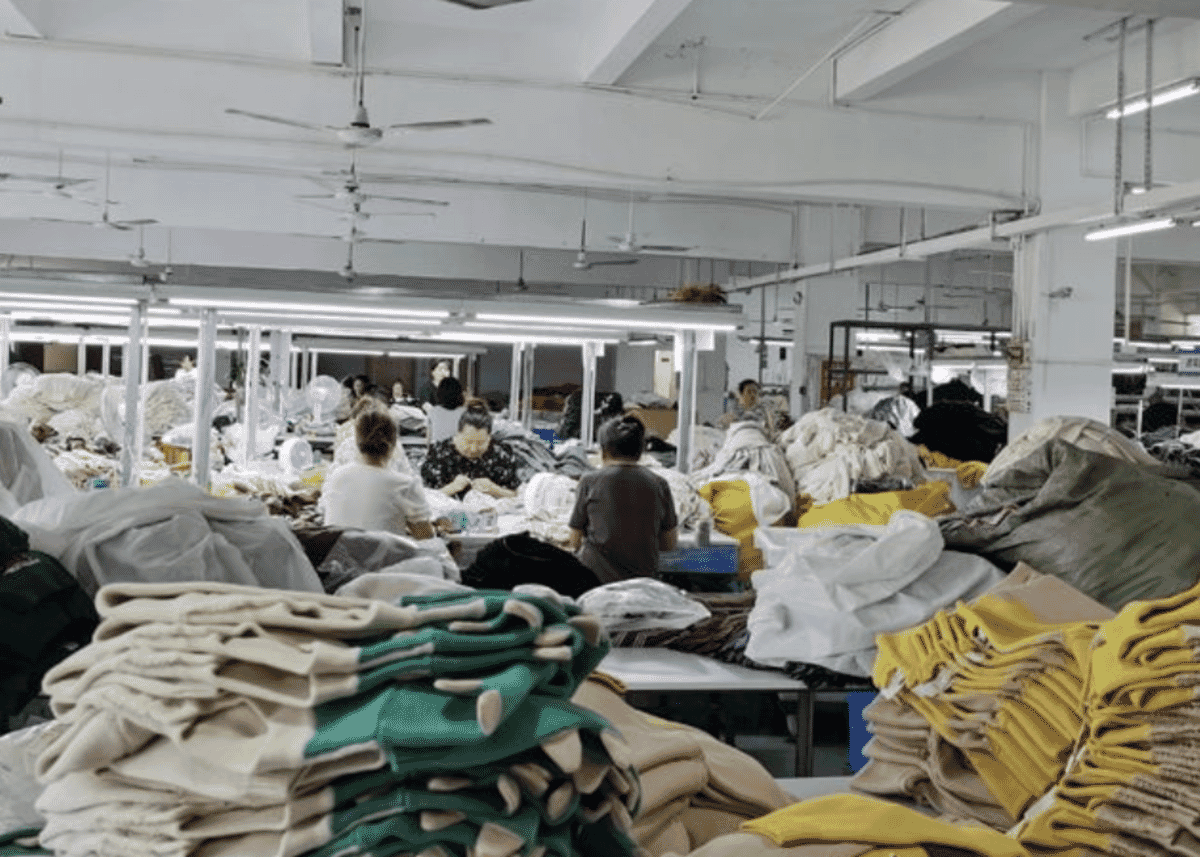
Which stages they own, and the answer predicts almost everything else. A company that owns its dyeing can commit to a shade date. One that subcontracts dyeing can only pass on a promise it received. Neither is better, and knowing which you have changes what you should expect, which is the same problem Istanbul's textile trade presents in a denser form.
Which of the four stages do you own? The single most useful question. Answers range from making-up only to the full chain, and every answer is legitimate.
Where does the cloth physically go between loom and cutting table? Each additional facility is a handover and a transport leg.
What is your dye lot minimum, separately from the fabric minimum? These are different numbers and both apply. Suppliers quote whichever is larger and buyers assume it is the only one.
Who holds the certification? In a four-company chain, GOTS or OEKO-TEX certification must cover the relevant stages. A certified knitter with an uncertified dyehouse cannot deliver a certified fabric.
What happens if the shade is off? Ask before it happens, because the answer tells you whether there is a single accountable party or a discussion waiting to occur.
Citation Capsule: Asking a Turkish textile supplier which of the four chain stages it owns predicts what it can commit to and what it can only pass on. In a multi-company chain, certification must cover the relevant stages, so a certified knitter working with an uncertified dyehouse cannot deliver certified fabric.
Five questions that map the chain
- Which stages do you own? Making-up only, or further upstream
- Where does cloth go between loom and cutting table? Count the handovers
- Dye lot minimum, stated separately from the fabric minimum
- Who holds the certification, and which stages does its scope cover
- What happens if the shade is off? Ask before it happens
None of these is a difficult question and a supplier that owns its chain answers all five quickly. Hesitation on the first one usually means more companies are involved than you were told.
Skip the search: the Turkey factory directory ($49) lists documented factories by category, city and capability, with the verification status of each. One-time payment, instant download.
Why Is Turkey's Chain Geographically Short?
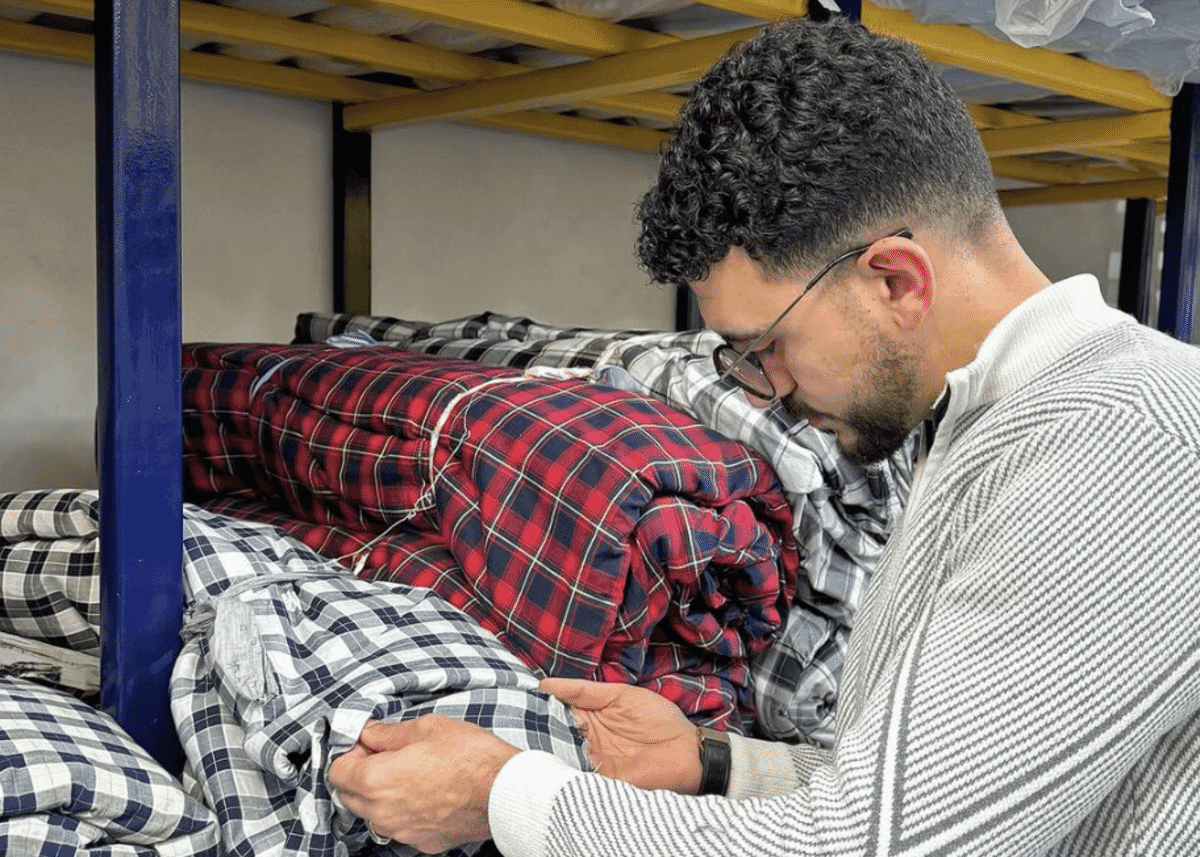
Because several stages often sit in the same region, and that proximity is one reason smaller runs work here. Cotton grown in the Aegean can be spun, knitted in Izmir and dyed without leaving the region, a fraction of the distance a chain covers when yarn, cloth and garments are made in different countries.
Short chains reduce lead time in a compounding way. Each handover involves loading, transport, receiving and inspection. Four handovers across three cities is measured in days; four handovers across two continents is measured in weeks.
They also reduce risk. Fewer border crossings means fewer customs events, fewer currencies and fewer opportunities for a consignment to sit somewhere while paperwork is corrected. That short chain is also what makes the sector's consolidation readable, because the surviving companies are visible to each other.
The Turkish advantage compounds with the duty position. A brand selling into the European Union gets a short internal chain and then a road leg to market, and garments in free circulation in Turkey enter the EU without customs duty under the EU-Turkey Customs Union when they travel with an A.TR movement certificate (European Commission). That combination is difficult to find elsewhere.
Citation Capsule: Turkey's textile chain is geographically concentrated: in the Aegean region, for example, cotton growing, spinning, knitting and dyeing can all happen within one region. Short chains reduce lead time because each handover involves loading, transport, receiving and inspection, and reduce risk by limiting border crossings and customs events.
What Does a Contracting Sector Do to the Chain?
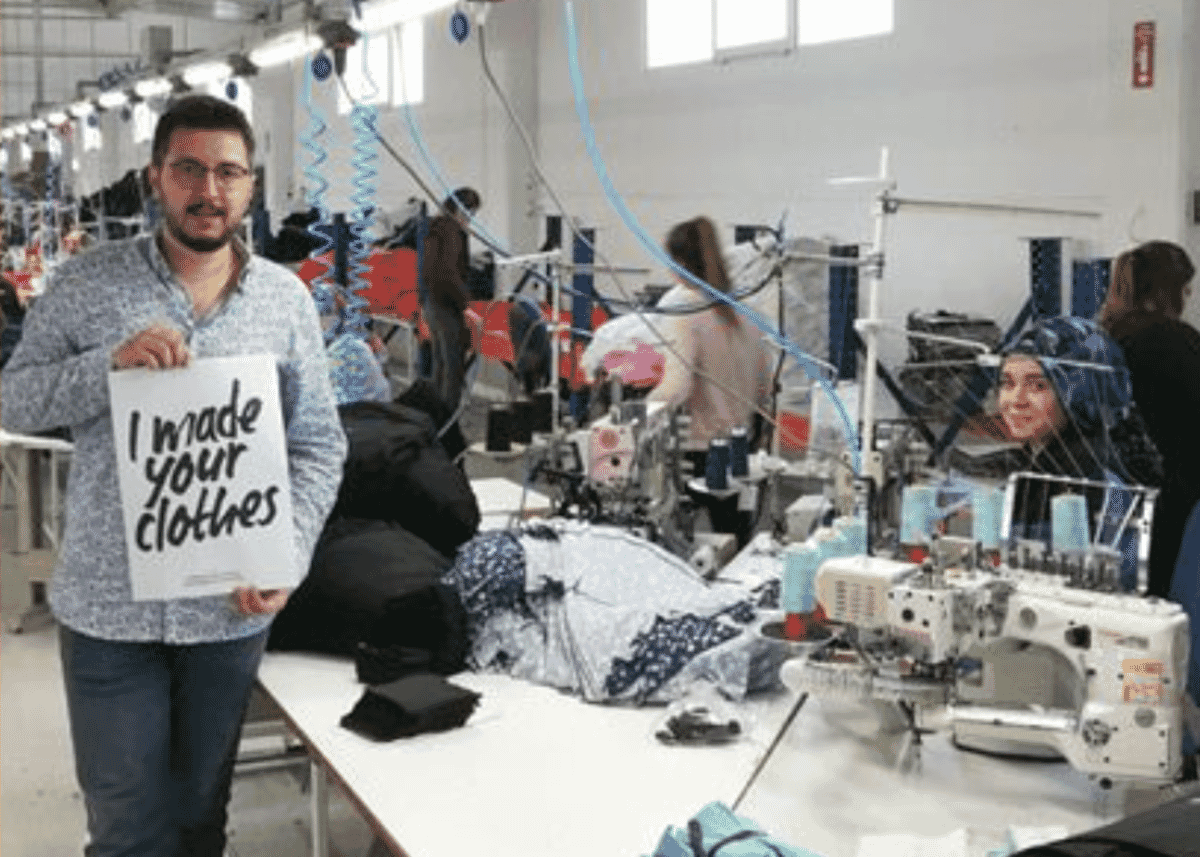
It makes chain continuity a separate risk from supplier continuity, and most buyers only check the latter. Social Security Institution (SGK) figures reported by Textilegence (2025) show 2,147 fewer registered textile and clothing businesses in March 2025 than in December 2024: 244 in textiles and 1,903 in clothing. A garment factory can be perfectly solvent and still lose the dyehouse it depends on.
| Stage at risk | Symptom you see | What to ask |
|---|---|---|
| Dyehouse closes | Lead time lengthens, described as scheduling | Do you have a second dyehouse? |
| Spinner closes | Yarn substitution, hand changes slightly | Is the yarn count and supplier unchanged? |
| Finisher closes | Finish inconsistency between lots | Who finishes it, and did that change? |
| Factory closes | Order stops. Deposit exposed | Registry check before the deposit |
Based on common supply-chain practice. Symptoms are typical rather than universal.
The symptom is a lead time that lengthens without explanation. A factory whose regular dyehouse closed is now queuing at somebody else's, and it will usually describe this as a scheduling delay rather than a structural change.
The mitigation is not complicated. Ask which stages are subcontracted and whether the supplier has an alternative for each. A factory that names a second dyehouse has thought about it. One that has not will find out the hard way on your order.
Vertically integrated mills carry less of this risk by definition, which is part of what the higher unit price buys. In a stable market that premium is hard to justify. In a contracting one it looks more like insurance.
Citation Capsule: In a contracting Turkish sector, chain continuity is a distinct risk from supplier continuity: a solvent garment factory can lose a subcontracted dyehouse and see lead times lengthen. Buyers should ask which stages are subcontracted and whether alternatives exist for each, since vertically integrated mills carry less of this exposure.
What Does Any of This Mean for an Order?
Three practical things, and together they change how you read every quotation you receive. Once the chain is clear in your head, a minimum that looked arbitrary becomes legible, and you can push on the part of it that will actually move rather than the part that will not. That is the difference between a negotiation and a conversation.
Negotiate the constraint, not the quote. If the minimum is a dye lot, changing to a stock colour moves it. Arguing about the piece count will not.
Ask for the fabric date, not the ship date. The ship date is derived from stages the factory does not control.
Choose the supplier to suit the order. A first run of 300 pieces in one colour suits an integrated mill or a factory with stock cloth. A complex multi-fabric programme suits specialists coordinated properly.
Four ways the chain changes your order
- Negotiate the constraint, not the quote. If a dye lot sets the minimum, change the colour
- Ask for the fabric date, not the ship date. The ship date is derived from stages nobody you spoke to controls
- Choose the supplier to suit the order. Integrated mill for a simple first run, specialists for a complex programme
- Check subcontracted stages have alternatives, because a solvent factory can still lose its dyehouse
A minimum that looks arbitrary is almost always a constraint being passed down from a stage you have not spoken to.
How Should You Read the Chain?
The chain explains the quotation. Four stages, four minimums, and the binding one is almost never the sewing floor you are speaking to. Once that is clear, the numbers stop looking arbitrary and start looking like something you can work with.
Ask which stages your supplier owns before you ask for a price. It takes one line, it costs nothing, and it tells you what that company can actually commit to as opposed to what it can pass along.
Frequently Asked Questions
What is the difference between a textile manufacturer and a garment manufacturer?
A textile manufacturer makes yarn or cloth: spinning, knitting, weaving, dyeing and finishing. A garment manufacturer cuts and sews that cloth into products. In Turkey these are frequently separate companies in different cities, and each stage carries its own minimum order quantity.
Why is my minimum order so high?
Usually because a stage upstream of the sewing floor is setting it. A dyehouse will not run a small batch of one colour, and a mill will not weave a short length of commissioned cloth. Changing to a stock colour or stock fabric moves the number more than negotiating piece counts.
What is the slowest part of textile production?
Often dyeing. Dyehouses run scheduled batches that must fill before processing, so small or unusual-colour orders wait for a compatible batch. Spinning rarely blocks a garment order because yarn is generally held in stock.
Is a vertically integrated mill better?
Better for lead time predictability and single-point accountability, and typically more expensive with less flexibility on specification. Separate specialists can be cheaper where you coordinate well. For a first order the accountability usually matters more than the price difference.
How do I know if my supplier subcontracts dyeing?
Ask which of the four stages they own and where the cloth physically goes between the loom and the cutting table. A supplier that owns its dyeing can commit to a shade date. One that subcontracts can only pass on a promise it was given.
Send the product, the quantity and the fabric you have in mind. We place your production with the factory in our group that suits the product, and our team replies normally within 24 hours and tells you which stages that factory owns and which it buys in. No commissions. No markups. The factory bills you directly.
Get in contact Download the directory ($49)Need a tech pack? Get a factory-ready single-style tech pack for $79. See what's included.
Editorial note: all company names, certification marks and trademarks referenced here are the property of their respective owners. MOQ, cost and lead-time figures are indicative market ranges, not quotes from any individual factory, and they vary by product, fabric and season. Duty positions were checked in October 2026 and can change. Always verify your own tariff classification and confirm terms directly with the factory before committing.
Sources
- Sheng Lu, FASH455, University of Delaware (2025): WTO-based analysis of global textile and apparel trade.
- US Census Bureau: Trade in Goods with Turkey, the official monthly import and export series.
- European Commission, Access2Markets: the EU-Turkey Customs Union and what it covers.
- European Commission, Taxation and Customs Union (2024): electronic A.TR movement certificate rules.
- Irish Revenue: Turkey Customs Union and preferential origin, including A.TR and EUR1 treatment.
- Istanbul Apparel Exporters Association: Turkish apparel export sector profile and membership.
- Global Organic Textile Standard: public database of GOTS-certified suppliers.
- Textile Exchange: certified company finder for recycled content and responsible fibre standards.
- OEKO-TEX Label Check: public verification of certificate numbers.
- amfori BSCI: social audit system documentation.
- USITC Harmonized Tariff Schedule: the current classification schedule and duty rates.
- US Customs and Border Protection: tips for new importers, including importer-of-record responsibility.
- European Commission, Directorate-General for Trade (2025): EU trade relations with Turkey, including bilateral trade values and partner ranking.
- Textilegence (2025): reporting on Turkish textile and apparel business closures.